Severe Deficiencies in Child Protection Throughout Yemen
Despite international commitments made by all parties involved in the Yemen conflict, these actors continue to fail Yemen’s children, who remain among the country’s most vulnerable and marginalized. Over the life of the SAFE (Supporting Awareness, Facilitating Enforcement of Children’s Rights in the Yemeni Conflict) Program, local partners continue to report alarming statistics drawing attention to the urgent need for comprehensive child protection.
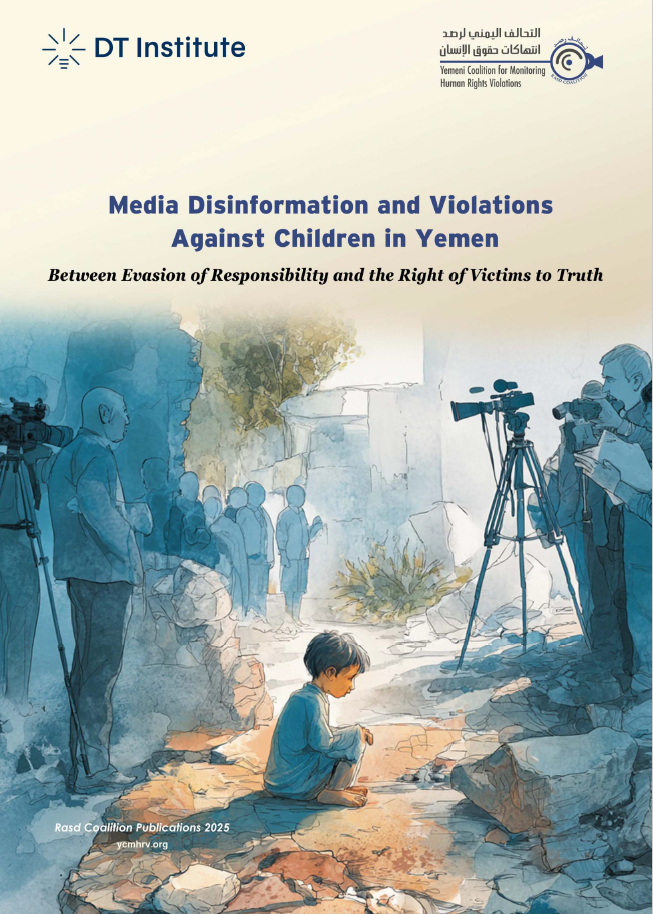
Over the life of SAFE, partners, which include the INSAF Center for Rights and Development (“INSAF”) and the Yemen Coalition for Monitoring Human Rights Violations (YCMHRV, also known as “Rasd”), have documented 428 human rights violations committed against children. The likely perpetrators of 97.2 percent of these violations were Yemeni conflict parties. These include the Houthi group (Ansar Allah), the Internationally Recognized Government of Yemen (IRG), the Southern Transitional Council (STC), and the Saudi-Led Coalition (SLC).
The Houthi group maintains responsibility for most of these violations at 69.4 percent. However, INSAF’s investigative reporting has also revealed how other conflict parties, including state-affiliated actors, repeatedly abuse child victims – initially, indirectly by subjecting them to displacement and loss of livelihood as causalities of the greater conflict, then directly through grave violations committed against child victims. The report also involved further documentation and verification by INSAF’s field team, finding that over 62 percent of the documented report cases were linked to military formations associated with the IRG.
Further SAFE analysis has also revealed patterns of compounded trauma amongst children, who are uniquely vulnerable and often experience intersectionality and complex violations. Under SAFE II, partners documented 50 complex violations (i.e., where one violation leads to or involves another violation or several violations).
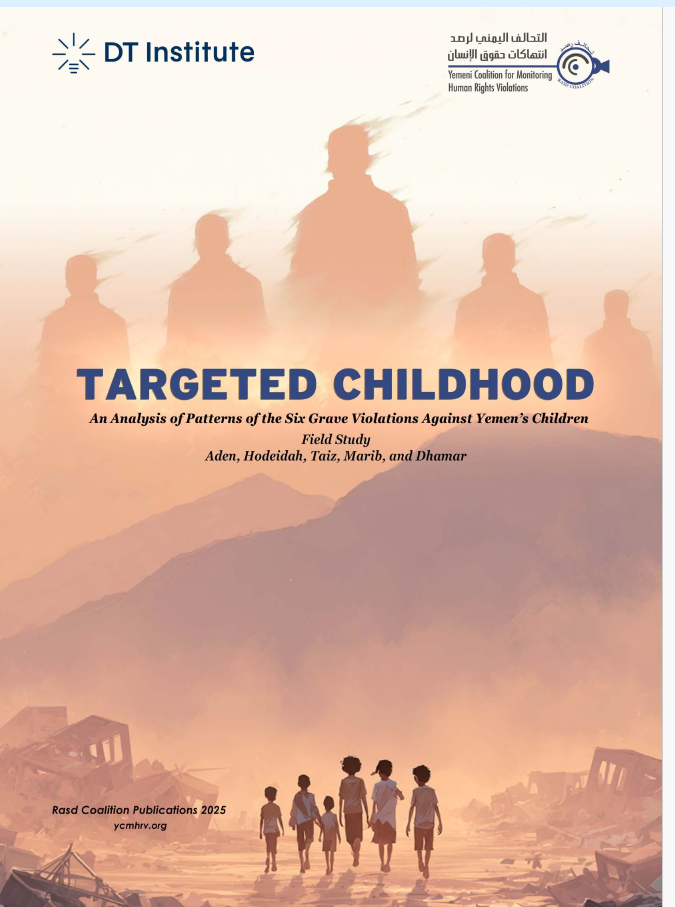
SAFE partners and experts stress that such complex violations have compounded impacts upon children, whose brains and bodies are still developing. These include serious and life altering impacts, as documented in YCMHRV’s field study, Targeted Childhood. The study examines Yemeni children’s exposure to repeated and interconnected cycles of abuse throughout the conflict, detailing their grave impacts. It found several severe and common impacts of such violations upon children, namely increased risks of school dropouts, aggression, addiction, early marriage, displacement, and suicide.
💬 “We all know that wars do not only leave devastation and destruction in the physical infrastructure, but they leave deep psychological scars. Children have been subjected to grave and repeated violations in Yemen.” – Dr. Rania Khaled, Child Psychology Consultant, during YCMHRV’s webinar launching the Targeted Childhood Report.
A Lack of Accountability Among Conflict Parties, Underpinned by Institutional Weakness
Underpinning these continuous and serious violations of children’s rights are regular weaknesses in institutional performance and demonstration of conflict parties’ commitment to children’s rights. Experts and activists agree that children’s violations remain underreported, especially those involving sensitive or stigmatized crimes.
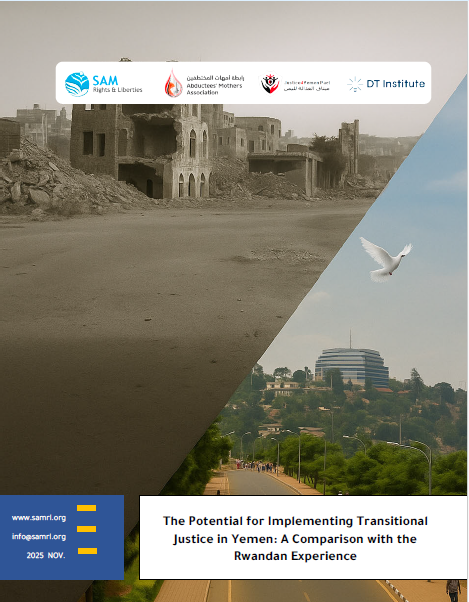
As documented in Targeted Childhood, 84 percent of experts indicated low levels of reporting from victims and families. They attributed this to fear of retaliation, lack of awareness, distrust of justice systems, and family pressure. To effectively address these low levels of reporting and the serious impacts of violations, the study calls for expanded protection programs and other mechanisms in line with transitional justice.
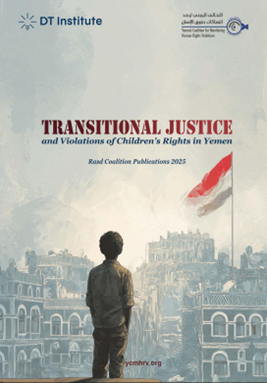
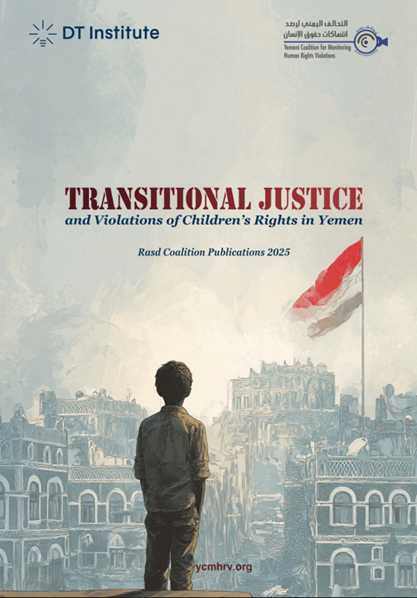
In the recent SAFE publication, Transitional Justice and Violations of Children’s Rights in Yemen, participants overwhelmingly held that significant systematic weaknesses in Yemeni institutional performance were primary factors in sustaining violations against children. Specifically, respondents identified absence of accountability (selected by 96.9 percent of participants), weak protection mechanisms (86.8 percent), and poor institutional coordination (80 percent).
Despite these challenges, the study also identifies promising local initiatives that have continued to contribute to urgently needed child protection priorities. These include psychosocial support, education, and community sessions for the benefit of children, though they remain constrained by limited funding and institutional fragmentation. Moreover, the majority of participants (approximately 69 percent) recognized the importance of children’s rights in transitional justice processes.
💬 “Children’s rights are a moral and legal obligation, not a privilege. When society listens to children’s voices and understands their rights through awareness-raising campaigns, everyone becomes a first line of defense against child exploitation, recruitment, and other violations. We have faced significant challenges in rehabilitating children suffering from psychological disorders caused by the loss of their fathers due to detention or enforced disappearance. For the sake of a healthy and resilient future society, the best interests of the child must be the guiding compass of the justice process.” – Abductees’ Mothers Association.
Children’s Rights and Transitional Justice
Children are the future, and transitional justice is centered on building a sustainable future upon a foundation of community cohesiveness, reconciliation, and non-repetition of violations. Moreover, as pointed out by experts at YCMHRV’s Targeted Childhood launch webinar, Yemeni human rights violations have having significant impacts upon children’s long-term psychological wellbeing in real time. This includes normalization of cycles of violence that require reintegration and psychological sessions interventions.
Under the Supporting Peace in Yemen through Accountability, Reconciliation, and Knowledge-Sharing (SPARK),community members, political parties, and civil society organizations have repeated emphasized the importance of children’s rights to Yemen’s transitional justice processes. In the study entitled Discussion on Transitional Justice: Perspectives of Political Parties and Civil Society Organizations, produced under SPARK by Justice4Yemen Pact (J4YP) partner, the Free Media Center for Investigative Journalism, participants stressed the importance of psychological support for children.
💬 “Engaging children in transitional justice pathways is not merely a humanitarian choice; it is a necessity for building sustainable peace. Children are the most affected by years of conflict, and their voices represent the living truth of what has occurred. When we enable them to express themselves and participate in mechanisms of justice, accountability, and reparations, we are not only addressing the wounds of the past but also laying the foundations for a more just and secure society in the future.” – Salim Al-Aghbari, Director of Programs and Projects at the Insaf Center for Rights and Development.
Some participants took this one step further by emphasizing the need to treat children as special categories of victims, who deserve greater representation and attention from transitional justice mechanisms. Their calls were reaffirmed by J4YP partner, the Center for Strategic Studies Supporting Women and Children (CSWC) in another SPARK report providing victims’ perspective and draft recommendations on transitional justice.
Synergies Between SAFE and SPARK
Community Engagement, Raising Awareness, and Restorative Justice Initiatives
Under SPARK, local partners, SAM for Rights and Liberties (“SAM”) and the Abductees’ Mothers Association (AMA), have taken the findings of these studies – most prominently, The Path Towards Peace study, into account. In doing so, SPARK initiatives actualize actionable recommendations through local restorative justice pilots, raising awareness initiatives, and restorative justice campaigns.
In addressing these gaps, SPARK works to advance local and national reconciliation, by furthering initiatives to educate local stakeholders on transitional justice concepts. At the same time, the program builds resilience within divided communities through the pilots, which create sustainable pathways for dialogue and conflict resolution. Such initiatives empower and enable local community members, including women and caregivers, to identify and advocate for Yemen’s children.
Under SPARK, and SAFE, local partners, including J4YP members, work to empower local community members through awareness-raising and education initiatives, teaching them about their rights, their children’s rights, and engaging them in local-level initiatives in which they are able to effectively advocate for their rights.
Such initiatives also involve the sustained and effective engagement of key decisionmakers and transitional justice stakeholders, including perpetrators, local authorities, governmental institutions, and civil society organizations. These entities are tasked with the institutional responsibility of child protection throughout Yemen. Thus, these local SPARK restorative justice pilots also contribute to the effective engagement of such entities in effective transitional justice, further demonstrating how these mechanisms can be scaled up to the national level and used to protect children’s rights.
Since its establishment the SPARK-created Community and Reconciliation Consensus Committee (CRCC), has worked to address several child-related cases throughout Taiz. These include cases wherein juveniles were exposed to violence or unjustly detained and community disputes impacting children’s interests and livelihoods.
To effectively address such cases, the CRCC has coordinated with parents, community leaders, relevant authorities, and dispute parties to reach fair legal solutions prioritizing the best interests of the children involved. Moreover, the Committee acts as a watchdog by overseeing child detention cases and advocating for restorative solutions, rather than punitive and retributive legal judgments. These interventions contributed to resolving several cases in ways that minimized psychological and social harm to children and prevented the reproduction of violence within the community.
For instance, in the case of the child Elias Abdulmalik Abdulhakim, SAM and the CRCC stepped in after discovering that 13-year-old Elias, who had been missing for three months, was detained in a Juvenile facility. The child was being held for stealing clothes from a stall, and the case had already been referred to the Juvenile Court before SPARK partners stepped in.
Despite these difficulties, CRCC members were able to effectively engage with the Head of the Juvenile Court and the stall owner, who they invited to a meeting at SAM’s headquarters. During the meeting, a settlement between the stall owner and the child was reached, enabling the child’s release without further difficulties.
💬 “The Committee stresses the magnitude of risks and violations faced by displaced, marginalized children, and children with disabilities amid the absence of adequate legal and social protection. This situation requires official authorities and humanitarian organizations to intensify efforts to provide a safe environment.” – TheiYazen Al Sawai, Member of the CRCC.
Shaping Cross-Sector Dialogue on Transitional Justice and Child Protection
Simultaneously, SAFE partners work to facilitate national child protection by engaging institutional, local, and international stakeholders in dialogues on transitional justice as a means to address and enforce children’s rights.
SPARK-supported transitional justice actors continue to meaningfully shape this cross-sector dialogue by integrating transitional justice perspectives into child protection and accountability spaces, helping align SAFE and SPARK agendas. The CRCC’s participation in INSAF’s webinar, launching their report on abuses committed against marginalized and displaced children, is just one example of this.
The report, entitled Children Without Protection, includes recommendations utilizing transitional justice to advance children’s rights. These include supporting national and local mechanisms that recognize marginalized children both as victims and transitional justice actors and establishing an independent and transparent accountability mechanism for child violations committed by conflict parties.
Through the CRCC’s intervention during the webinar, the Committee provided perspective to these recommendations – depicting the grave impact of violations upon children and the positive impacts of reconciliation and rehabilitation-focused resolutions. In doing so, the CRCC shared details from real-life incidents, where community disputes escalated due to children’s involvement. It also emphasized its efforts to preserve a fair, child-sensitive approach within law enforcement institutions.
In one case, this instigation and involvement resulted in the death of one child at the hands of another. The CRCC’s example stressed that resolution of such cases thought transitional justice processes, i.e., by championing reconciliation and productive, forward-facing dialogue, is all the more necessary when children are involved.
Moreover, during YCMHRV’s second annual national child protection workshop in Aden, transitional justice was discussed extensively. During the workshop, participants were divided into sub-groups to encourage discussion on key aspects of the Yemen landscape to be discussed in relation to child protection. One of these groups was assigned a focus of accountability, transitional justice, and reparations for children.
By the end of the workshop, the group agreed on a shared vision, which stressed the need for a comprehensive national approach. moving beyond emergency responses. Participants within this group emphasized the need for concrete legislative reform, an effective protection system, and transitional justice that considers children both as victims and engaged actors. Group participants summarized their shared perspective in a comprehensive recommendations document.
The workshop is expected to lead to concrete action on child protection in line with the child protection roadmap, developed as a result of the workshop and numerous dialogues with government institutions and those responsible for child protection throughout Yemen. The group’s document outlining recommendations for transitional justice and children’s rights will continue to inform such efforts.
SAFE, SPARK, and J4YP partners also worked to engage key international stakeholders, including the United Nations Special Rapporteur on the promotion of truth, justice, reparation and guarantees of non-recurrence, on transitional justice and children’s rights. Much of this engagement was done surrounding the 60th Human Rights Council (HRC) session, held in Geneva in September and October 2025.
💬 “During our participation in Geneva on the sidelines of the 60th session of the HRC, and through our meeting with the Special Rapporteur on the promotion of truth, justice, and guarantees of non-recurrence, we …stressed that integrating child justice must be a foundational principle in any peace consultations and in any future transitional justice framework. This is essential to ensure recognition of victims of the six grave violations, particularly the recruitment of children, and to secure effective remedies and reparations for them and their families, as they remain among the most severely affected groups by the war and conflict in Yemen.” – Mutahar Albathigi, CEO of YCMHRV.
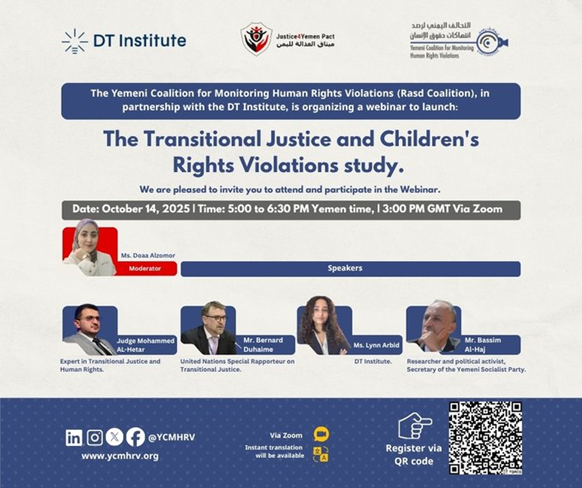
As a result of their coordination, the Special Rapporteur participated in YCMHRV’s webinar launching their report on TJ and child protection.
The webinar was attended by over 85 participants, including victims, human rights activists, and other Yemeni stakeholders. The SR interacted directly with victims and local activists. He emphasized the importance of investing in community education and transitional justice awareness now to enable transitional justice-infused peace processes in the future.
Looking Forward
While SPARK, SAFE, and J4YP partners affirm their steadfast commitment to continue efforts which contribute to the protection of children, the promotion of reconciliation, and the strengthening of peaceful solutions and effective transitional justice initiatives, they also emphasize that further, more robust engagement is needed.
Currently, partners are looking forward to SAFE’s child protection roadmap, which will bring together civil society, institutional figures, governmental entities, and international partners in comprehensive reforms aimed to strengthen the protection of children. “These initiatives were all envisioned in a forward-looking manner utilizing transitional justice tools and tactics to ensure effective, victim-led, and sustainable peacebuilding for Yemen’s future generations,” explained DT Institute’s Program Officer, Lynn Arbid.
Incorporating the unique needs and perspectives of children while shielding their vulnerability requires adults to meet such stakeholders at their own level. “This is often not a natural or easy task for adults,” stated Arbid. “However, it is essential. Effective transitional justice should create a cohesive society that perseveres for generations to come – the children of today are tomorrow’s generations.”
As emphasized by the International Center for Transitional Justice (ICTJ), children particularly impacted by conflict and mass atrocities may have a unique perspective on how these events shape their communities. If this perspective includes grievances that are not addressed, these will be carried on by future generations. While the ICTJ acknowledges the balance that must be struck between children’s right to participate in transitional justice initiatives and their right to protection, it outlines that this can be done effectively.
Moreover, the ICTJ, in line with J4YP, SAFE, and SPARK partners, also stressed that “children’s participation does not end after testimony is given,” emphasizing the value of teaching truthful history in classrooms and including the education sector in “giving meaning to transitional justice processes.” With increased donor support, the child protection roadmap and similar future initiatives, championing children’s rights and involvement in transitional justice, can be actualized.