1. The Value of Documentation in Transitional Justice and to Push Forward Accountability
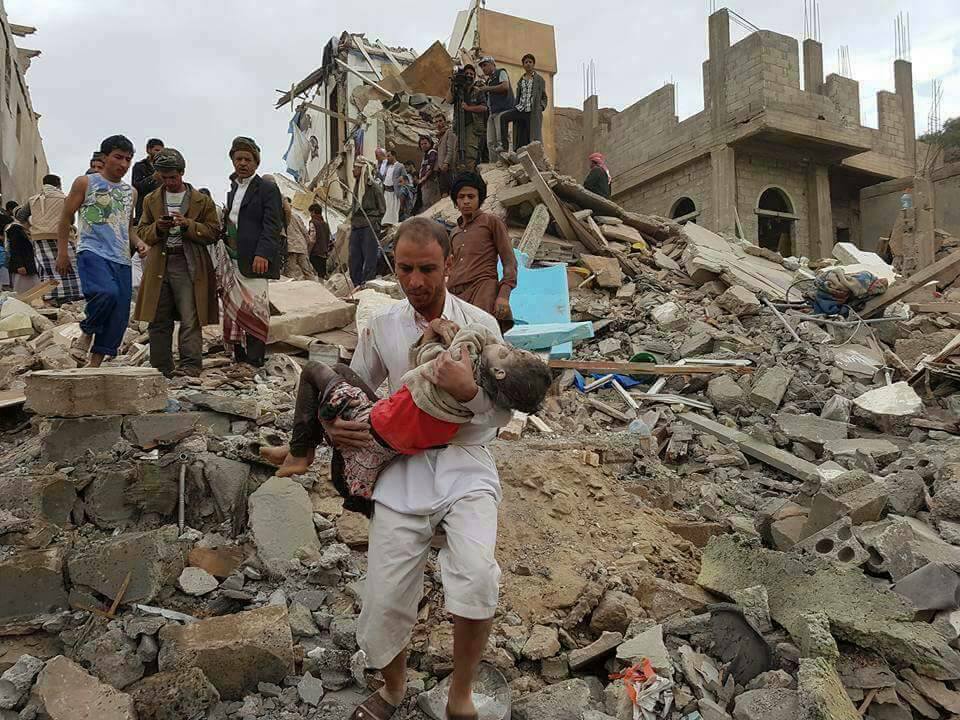
Documentation of human rights violations and atrocities plays a critical role in addressing such atrocities. Effective documentation creates an undisputable, verifiable record. It facilitates the memorialization, archiving, and preservation of victims’ and community historical memory; empowers victim assistance and reparation programs; equips key actors to battle against impunity; identifies and illuminates needs for institutional reforms; and enables justice sector actors to effectively pursue accountability.
Documentation information and data outputs can be used in a myriad of ways to push forth each of the above objectives and outputs to deliver justice in favor of victims and provide warranted consequences for perpetrators, their accomplices, and enabling entities. Such information can be revealed to the general public, international entities, and outside countries in a tactic commonly referring to as “naming and shaming.” It can also create a historical record of human rights abuses, allowing acknowledgement of the atrocities that occurred, the suffering they created, and concrete evidence to contest current or future denials.
In this sense, documentation is necessary not only in addressing atrocities but also in enabling societies to move past violent records of human rights violations and atrocities. Documentation does so by providing the necessary foundation for transitional justice processes, which are composed of five primary pillars. These pillars are truth-seeking, reparations, guarantees of non-recurrence, memorialization, and accountability. Accountability, in particular, can be pursued in several ways. However, documentation is always the vital first step.
💬 “In the long term, documentation is the gateway to any future transitional justice or trials in Yemen, as it preserves evidence before it is lost or destroyed.” – SAM
Documentation is not only a historical record but also an operational tool for accountability actors. Documentation enables both current and future accountability, including via transitional justice mechanisms, such as through criminal prosecution, truth commissions, reparations programs, and institutional reforms. Moreover, documentation is also a critical first step in broader accountability efforts that go beyond single country or community-wide atrocities to address regional and global abuses and the systems and networks that underpin them.
However, in order for documentation to be used effectively as an operational tool for accountability actors, it must be made accountability ready. Accountability-oriented documentation requires thorough verification; systemic evidence preservation that maintains chain of custody standards and preserves the integrity of the collected information; informed consent on behalf of victims, survivors, and witnesses; and robust analysis to adequately and comprehensively establish criminal behavior and patterns, perpetrators, command structures, and responsibility for violations.
Within the current Yemeni context, such documentation exists. However, there is a pervasive gap when it comes to accountability-oriented documentation. Documentation efforts remain focused on victims and survivors. There is standardized perpetrator-focused methodology to identify responsible actors, assess current relevance, update and validate existing evidence, and transform historical case files into actionable, policy-ready accountability products.
💬 “The importance of documentation directed at international mechanisms lies in its transformation of victims’ suffering from mere narratives into recognized evidence upon which legal and political action can be built. It is crucial for protecting the truth from denial, preventing impunity, and keeping the issue of violations on the international community’s agenda, even in the absence of domestic will for accountability. Furthermore, it serves as an effective pressure tool, potentially leading to individual sanctions, restrictions on the movement of perpetrators, and linking international support to human rights records.” – SAM
2. Overview of the SPARK Program
Under the SPARK (Supporting Peace in Yemen through Accountability, Reconciliation, and Knowledge-Sharing) program, DT Institute and its local partners, the Abductees’ Mothers Association (AMA) and SAM for Rights and Liberties (“SAM”), continue to work towards whole-of-society transitional justice in Yemen. In doing so, partners are tackling transitional justice from all sides, embracing all components of Yemeni society.
To address community disruption and discontent, SPARK partners have launched restorative justice initiatives. These initiatives empower communities to address critical and devastating community-wide issues and atrocities impacting peace and causing public unrest throughout Yemen. This model was designed in response to the findings of The Path Towards Peace, a research study published by SPARK in April 2025. This study captured local understandings of transitional justice across Yemen. It revealed that 79 percent of community member participants identified legal accountability for the perpetrator as one of the most important measures to provide redress for harm and achieve justice in cases of human rights violations that were committed against them or their family member(s).
In enabling restorative justice pilots, SPARK partners work to conduct comprehensive documentation to identify the issues and atrocities impacting Yemeni communities. This documentation is critical in enabling community- and victim-led reconciliation. Moreover, such monitoring and documentation efforts reveal key perpetrator tactics and linkages inside and outside of Yemen, underpinning past, current, and future abuses.
SPARK partners are also working to push forth transitional justice endeavors and pillars by addressing critical victims’ issues and accountability endeavors in creative ways. These efforts have been amplified and pushed forward by their membership in the Justice4Yemen Pact (J4YP) Coalition, a partnership of 10 civil society organizations that leverages their collective voice and unique aspects of expertise to push forth accountability and justice efforts in Yemen in support of victims. SPARK and J4YP efforts include engaging with key local and international figures in support of prisoner exchange agreements, raising awareness of human rights violations via public advocacy statements, and following up on cases of civil society and activist repression.
SPARK and J4YP activities also seek to draw connections between justice, accountability, and transitional justice endeavors within Yemen and abroad. SPARK partners work to bring together experts on these topics in various countries throughout the Middle East, with the knowledge that the region’s perpetrator and conflict dynamics often intersect, especially in light of previous regional escalations on behalf of Iran and their affiliates, including the Houthi (Ansar Allah) group.
3. Leveraging Documentation Under the SPARK Program and J4YP Coalition
Under the J4YP Coalition, partners have gathered thorough, on-the-ground documentation of over 3,000 human rights violations, including grave violations against children and 50 interconnected violations of children’s rights. Partners’ documentation has covered a wide range of serious human rights violations and conflict-related abuses, including: secret and unofficial detention facilities; enforced disappearances; misappropriation and looting of public and private assets; child and youth recruitment; destruction and demolition of civilian homes; airstrikes and attacks against civilians; and other grave violations of international human rights and humanitarian law.
J4YP efforts have also resulted in the preservation of 874,319 digital records and the verification of 4,252 new digital records of human rights violations. Beyond documenting violations, J4YP partners have established rigorous verification, metadata preservation, chain-of-custody, and secure information management practices that enhance the credibility and usability of evidence for accountability purposes.
Documentation produced by J4YP partner organizations has been cited and relied upon in several international accountability and reporting mechanisms, including reports issued by the UN Group of Eminent Experts (GEE) and the U.S. Department of State Human Rights Reports. Partner-generated evidence has also contributed to international accountability efforts, including sanctions-related processes. Examples include documentation concerning Sultan Zabin, which provided detailed information on his role in the detention, torture, and abuse of women; Abdulwali Al-Jabri and his involvement in the recruitment of Yemeni youth for deployment to Russia; and Abdulqader Al-Murtada for his role in violations against detainees and prisoners.
Documentation Under Restorative Justice Pilots
SPARK restorative justice pilots have proven largely successful in addressing community-wide conflicts induced by conflict, creating sustainable pathways for local and national reconciliation; and building resilience within divided communities through the use of community-led implementation and replicable models. Additionally, restorative justice pilots contribute to partners’ repositories of evidence, documentation, and survivor testimonies as well as to relationship and trust-building with local authorities and communities, which can be leveraged to support creation of accountability-ready case files and evidence products.
Under restorative justice pilots, SPARK partners have engaged a systematic and organized documentation methodology, pulling information from various sources and engaging in thorough verification of such information. These sources include victim and witness testimonies, as well as on-the-ground observations, photographs, videos, and official records and government documents, such as medical records, death certificates, and more. Each case has been comprehensively verified by cross-referencing sources, evidence, and the data collected to reveal the truth of each violation and community-level dispute that the pilots seek to resolve.
By example, the Tanker Massacre Restorative Justice Pilot has resulted in comprehensive research and analysis of an indiscriminate attack in the form of an oil tanker fire causing over 150 causalities, which occurred as a result of the Houthis 2015 siege of Taiz. In total, pilot efforts resulted in the comprehensive documentation of 71 human rights abuses, identification of 111 victims – many of whose fates were completely unknown – and collection of 40 death certificates. Documentation efforts provided a comprehensive file on the tanker massacre, enabling SPARK to publish an article and short film documenting the atrocity, its impact on the local community, and demanding accountability from the responsible perpetrators (primarily, the Houthi group).
💬 “The exhibition [of the tanker massacre atrocity] captures tragedy with eloquence beyond words, ensuring that memory becomes a tool for justice and reconciliation.” – Asma’a Al-Ra’i, Executive Director of the Abductees’ Mothers Association
SPARK efforts under the pilot also included coordination and engagement of local authorities. SPARK partners coordinated with the Civil Status Department to issue seven death certificates for victims, whose deaths were never investigated or recorded by authorities. Partners also met with local government representatives, garnering their support and discussing implementation of memorialization and documentation activities, including the collection of victims’ records Government representatives included the Director of Al-Mudhaffar District, Governor of Taiz’s Deputy for Defense and Security Affairs, Director of the Civil Status and Civil Registry Department, and the Undersecretary of the Ministry of Interior.
SPARK partners leveraged documentation and local authorities’ participation to amplify the atrocity by instituting the Memory Museum – the first of its kind in Taiz – to memorialize the siege atrocities. These further generated interactions and engagement with key local and international stakeholders including the Delegation of the European Union to Yemen and Taiz’s first Deputy Governor. Further, the museum obtained significant community engagement with cooperation from the over 38 locals (including six trainees under Activity 1.2), two local government offices, and seven public schools and universities. Inherent within memorialization are accountability and efforts to ensure non-recurrence of similar future violations. Preserving collective memory helps to prevent denial, support truth-seeking processes, and preserves evidence for future justice mechanisms and litigation to hold perpetrators accountable.
💬 “[The Memory Museum is a] living archive that safeguards Taiz’s history for future generations.” – Sam Al-Buhairi, local Yemeni journalist
SPARK partners also conducted a follow-up meeting with the Undersecretary of the Ministry of the Interior and Major General, in which the Major General pledged to raise the issue with the Presidential Leadership Council (PLC) ensure inclusion of tanker victims documented by SPARK partners in the national war victims record. This further demonstrates the strength of their capabilities for relationship-building with local authorities, enabling further documentation and accountability efforts.
Documentation As Advocacy and Safeguard Tools to Push Forth and Protect Victims in Prisoner Exchange Deals
In addition to restorative justice pilot activities, SPARK and J4YP partners have continuously engaged in documentation and advocacy for victims of human rights abuses, including arbitrary detention and enforced disappearances. Most recently, SPARK partners worked to support the prisoner exchange agreement between the Houthi group and the internationally recognized government of Yemen (IRG). Within the most recent United Nations (UN)-backed agreement, these parties agreed to exchange approximately 1,600 to 1,728 detainees, including 580 Houthi prisoners.
SPARK and J4YP partners have continuously documented Houthi prisoner exchange practices, including the transfer of innocent, non-combatant civilians, who have been arbitrarily detained, enforcedly disappeared, or both without any notification to their families for simply maintaining opposing political views. Within this exchange, Yahya Kazman, the Deputy Head of the IRG’s negotiating team has confirmed that non-combatants, including journalists and politicians, are included. As part of their steadfast commitment to detainees and to championing transitional justice under SPARK, partners have involved themselves in the preparation and implementation of past prisoner exchange deals by amassing repositories of insightful documentation efforts.
In preparation for the ongoing prisoner exchange, AMA submitted lists of abductees and detainees to the Office of the Special Envoy for the Secretary-General for Yemen (OSESGY) and other relevant stakeholders. AMA’s documentation efforts facilitated the agreement by verifying names of individuals on exchange lists. Their documentation efforts included comprehensive information, including on victims’ cases, the violations committed against them, and interconnected crimes. This enabled SPARK partners to coordinate with the families of the abducted and draw attention to key issues, including financial extortion practices that are commonly used by brokers on both sides to solicit money from families. It also prevented exclusion, misinformation, politicization, and manipulation of human rights cases during negotiation, enabling documentation to operate as an effective safeguard and protection mechanism for victims and their families.
These documentation efforts also allowed SPARK partners to foster relationships with key exchange stakeholders, providing them with access to the OSESGY and negotiating parties. In meetings with the negotiation committee, AMA advocated for the prioritization of humanitarian cases that they have documented. These included cases involving sick, elderly, and long-term abductees.
The recent prisoner exchange is one illustration of the broader accountability gap plaguing Yemen’s conflict. As SPARK partners have repeatedly emphasized human rights abuses, including enforced disappearances and arbitrary detentions should ideally be kept free from political bargaining or calculations, including prisoner exchanges. SPARK partners also acknowledge that while prisoner exchange deals serve critical humanitarian needs and as an entry point for transitional justice, they are merely band-aids, allowing perpetrators to bypass systemic accountability and continue their operations with impunity.
4. Transitional Justice and Accountability for Interconnected Cross-Border and Regional Human Rights Violations
Under transitional justice, accountability is often thought of as the pursuit of justice via judicial and non-judicial mechanisms, such as truth commissions and criminal proceedings, to investigate, prosecute, and punish perpetrators of mass human rights violations. It is designed to end impunity, institutionalize the rule of law, and restore the dignity of victims. Thus, it requires a careful balance between retributive justice, which aims to punish perpetrators in proportion to their crimes and acts as a mechanism of deterrence to ensure non-repetition, and restorative justice, which aims to repair the harm done to victims and communities through dialogue, offender accountability, and reintegration.
However, transitional justice, which is inherently a country-wide process, cannot address the full record of human rights violations within a country when such violations are interconnected to forces and influencers outside of the country. It must expand its justice and accountability efforts regionally as appropriate to address the regional nature of the underpinnings of human rights violations impacting the country’s ability to move forward and engage in effective, whole-of-society peacebuilding.
Regional dynamics within the Middle East continue to shift in the wake of the increased leverage of Iran and its affiliates, including most notably the Houthi (Ansar Allah) group. These entities continue to foster an interconnected operating environment across conflict-affected countries in the region, including Yemen. These recent and ongoing fluctuations have resigned country-specific frameworks and initiatives, limiting their value and ability to address larger, regional dynamics without significant analysis and relation-mapping. Moreover, they have outpaced country-specific frameworks and initiatives, limiting their ability to capture the increasingly interconnected nature of perpetrators, command structures, proxy actors, financial facilitators, procurement networks, and transnational repression that span multiple countries.
Documentation efforts confined to national boundaries frequently capture only segments of broader regional networks, reducing opportunities to identify shared perpetrators, enabling actors, and recurring patterns of abuse. As a result, important gaps remain in identifying those responsible for ordering, directing, facilitating, or committing violations; mapping perpetrator linkages; mapping command responsibility and enabling relationships; tracing financial, logistical, technological, and procurement networks that sustain abuses; and identifying patterns of transnational repression.
Documentation gaps are compounded by accountability gaps. As described above, standard transitional justice accountability structures, such as truth commissions, domestic litigation, and national institutional reform, are built to address country-wide crimes, rather than regional, interconnected criminal dynamics. Thus, they must be complimented and sustained by regional and international accountability efforts, such as visa restrictions and sanctions, which are well-structured to address complex, cross-border dynamics and human rights-impacting illicit networks.
💬 “Professional documentation impacts accountability when collected information becomes a tool for official pressure, leading to the inclusion of perpetrators’ names in UN reports or on sanctions lists that include travel bans and asset freezes. This restricts the movement of officials and places them under direct international scrutiny, creating an environment where crimes cannot be politically ignored and making it imperative for any future settlement to consider the issue of accountability. As evidence accumulates, it becomes possible to launch international or national investigations later, meaning that sanctions could be the beginning of a broader path toward accountability, rather than merely a symbolic measure.” – SAM
4. Building Off of Current Documentation and Accountability Efforts to Increase Their Impact
SPARK and J4YP partners are well-equipped to leverage restorative justice pilot outcomes and partners’ documentation efforts to support additional, transnational accountability in the form of visa restrictions, sanctions, and other international efforts. In fact, partners view these measures as natural and complementary phases in addressing human rights violations throughout Yemen and in pursuing accountability to actualize effective, whole-of-society transitional justice.
Partners’ eagerness to build on their previous documentation work to push forth accountability measures, including sanctions, visa restrictions, and other efforts to disrupt perpetrators’ crimes and reduce impunity is reflected in their acknowledgement of the finite impact of some of their endeavors, such as prisoner exchange agreements. These agreements, while important and critical in delivering long overdue relief to families and enabling reparations mechanisms for arbitrarily held political prisoners, are not structured to provide for accountability. They provide limited liberation to a select few, while failing to address the underpinnings of continued impunity and human rights abuses.
💬 “We do not only demand the freedom of these abductees; we demand justice as a comprehensive system, beginning with uncovering the truth about the violations, continuing with restoring their freedom, redressing their grievances, and providing them with fair compensation for what they have endured. … The day must come when justice is fully served by granting them their rights and holding accountable all those responsible for violating them.” – AMA
Moreover, partners have also expressed readiness to cooperate with regional partners to strengthen documentation effectiveness in mapping cross-border illicit networks and perpetrators and to hold them accountable. According to DT Institute Senior Program Manager Feras Hamdouni, “Yemen cannot afford to wait until a political settlement emerges before building the record of violations committed during the conflict. The experience of Syria demonstrates that systematic documentation collected today can become the foundation for accountability tomorrow. By preserving survivor testimonies, documenting patterns of abuse, and identifying networks of responsibility, Yemen’s documentation efforts can help ensure that future justice mechanisms are informed by evidence rather than memory alone.”
Syria has demonstrated the importance of early, systematic documentation of atrocities even when accountability pathways are delayed. Syrian civil society organizations, survivors, and international mechanisms documented violations over many years, creating archives that later supported investigations, universal jurisdiction cases, sanctions designations, and international accountability efforts. Yemen can draw lessons from Syria by ensuring documentation today is collected with future accountability needs in mind.
Moreover, comprehensive documentation performed under SPARK and the J4YP Coalition can enable and support the creation of accountability-ready case files and evidence products that can be used today. By building upon itself and partner’s outputs, especially where they concern Houthi-affiliated actors, and cooperating with regional actors on transnational accountability endeavors, current documentation efforts can be leveraged and scaled up effectively to push forth justice and accountability all throughout the region.