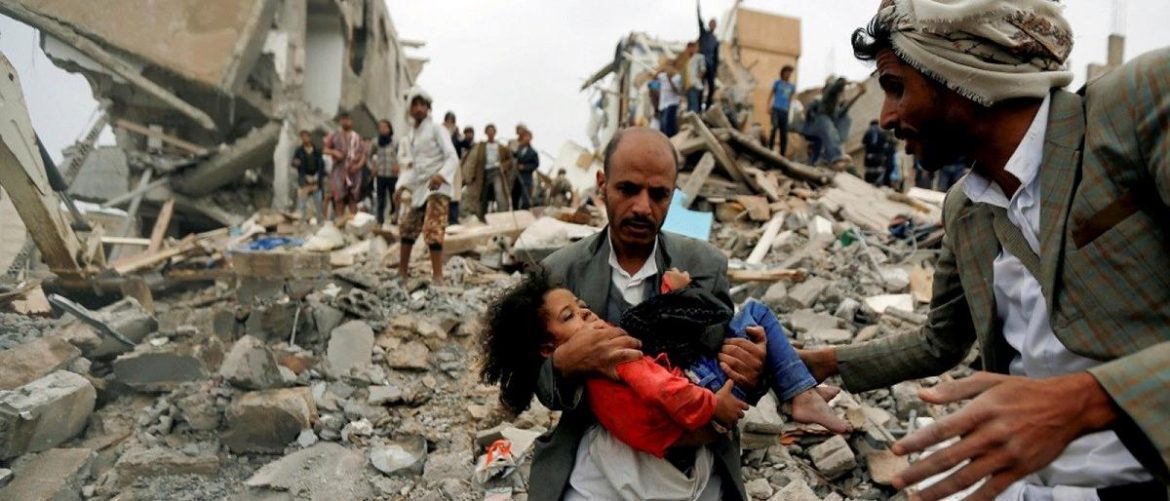
The Need for Documentation in Combatting Yemen’s Dire Human Rights Environment
Accurate documentation of human rights violations is critical for accountability, justice, and prevention of future abuses. Credible and verified documentation turns testimonies into admissible evidence, as required by courts and international justice mechanisms. This evidence can then be turned into action in courtrooms, through advocacy initiatives, via international justice mechanisms, and in media publications educating the public and amplifying the voices of victims. These actions uplift victims and dissuade perpetrators by demanding accountability, which must be realized in order to combat impunity and ensure such atrocities are not completed.
Moreover, evidence assists justice actors in identifying perpetrator and violation patterns, creating historical records, and enabling more robust advocacy. Simultaneously, such documentation also serves to empower victims by amplifying their voices, respecting informed consent and Do No Harm principles. This advocacy can then be used to not only bring individual perpetrators to justice but also to combat repeated abuses on widespread levels, such as in Yemen, where the human rights situation continues to remain dire.
💬 “Documentation that adheres admissibility standards is crucial for the effective administration of justice – whether on the international or local scale. Admissibility typically requires information to be authenticated, follow a documented chain of custody, and obtained via respect for Do No Harm procedures that prioritize witness and victim rights. If the process of documentation does not follow these standards, evidence may be excluded leaving victims with no recourse.” – Lynn Arbid, US-based Attorney and Program Officer, DT Institute.
The Crucial Importance of Documentation for Yemen’s Future, as Recognized Under SPARK
Documentation is critical, not just in fighting media manipulation and bringing evidence to courts and justice mechanisms, but for any accountability and justice endeavors. Documentation is the starting point. It is necessary in maintaining a historical record of atrocities, tracking perpetrator and abuse patterns, and enabling Yemen to push past its bleak history and cycles of atrocities. Without documentation, victims of human rights abuses go unheard, and their experiences remain memories, often deeply impacting the victims but never leaving a significant mark on history or the perpetrators who committed these abuses. This was recently emphasized by a recent webinar held under the Supporting Peace in Yemen through Accountability, Reconciliation, and Knowledge-Sharing (SPARK) program.
During the webinar, entitled Transitional Justice in Yemen and Syria, Maysaa Shujaa Aldeen, Senior Researcher at the Sana’a Center for Strategic Studies, emphasized that periods in Yemen’s history without documentation would remain unaddressed by future transitional justice processes. “Discussions of transitional justice for periods [in Yemen’s history] that have not been documented remain challenging due to a lack of evidence and systematic review,” she stated.
She compared and contrasted those periods to the current one, emphasizing that during the ongoing war, efforts are being made to document atrocities. In doing so, she highlighted that weak documentation prior to 2014 enabled impunity to take root and hindered effective implication of the transitional justice law proposed during the National Dialogue Conference. This set off cycles of repeated impunity, repeated atrocities, and politicized dialogues surrounding national reconciliation, driving insecurity and instability in Yemen.
Factors Sustaining Violations in Yemen
After over a decade of ongoing conflict, the Yemeni human rights landscape remains dire, marred by numerous human rights violations, including enforced disappearances, arbitrary arrests, unlawful and arbitrary killings, and propagandization of media and human rights violation narratives. Among its victims are some of the most vulnerable – children, who continue to be subjected to grave violations in times of armed conflict, as coined by the United Nations (UN).
Yemen’s rampant culture of impunity, especially for influential actors and those linked to conflict parties, lives on until today. Violations continue because perpetrators often face few, if any, consequences. This is attributable to systematic weaknesses in governmental and institutional performance, including weak protection mechanisms and poor institutional coordination. This is especially true in cases of human rights violations and grave violations against children, as Yemen’s most vulnerable and as documented by local partners on the ground under the Supporting Awareness, Facilitating Enforcement of Children’s Rights in the Yemeni Conflict (SAFE) program.
This absence of accountability, which was cited as a primary factor in sustaining violations against children by 96.9 percent of local respondents in SAFE’s Transitional Justice and Violations of Children’s Rights in Yemen report, is also sustained by the greater culture of impunity. This includes ongoing propagandization of media and human rights violations, turning atrocities into politicized narratives and concealing the truth.
Such narratives not only effectively distort evidence, but they are also tools by which armed actors consolidate power, radicalize youth, and expand threats to destabilize the broader region – as further documented by SAFE partners. Against this backdrop, verifiable documentation is the only effective option in combatting intentional media manipulation and extensive abuses that continue to be routinely committed against Yemen’s locals and its most vulnerable.
SAFE Documentation: Addressing Grave Violations Against Children
Under SAFE, local partners, the INSAF Center for Human Rights and the Yemen Coalition for Monitoring Human Rights Violations (YCMHRV, also known as “Rasd”) maintain dedicated teams of field monitors, operating in areas controlled by the internationally recognized government of Yemen (IRG) and the Houthi (Ansar Allah) forces. These include isolated, difficult-to-reach, and dangerous areas, where many international and local organizations are unable to operate, like Dhamar, Hajjah, Mahweet, Dhle, and Amran.
DT Institute supports their documentation efforts by ensuring field monitors and partners are equipped with the necessary skills for organized and verifiable documentation that avoids needless re-traumatization of victims and witnesses. These include trauma-informed trainings and documentation training sessions provided directly to field monitors as well as the development of a trauma protocol. Working hand-in-hand with such documentation efforts are SAFE and SPARK initiatives for community building, psychosocial and legal support, and healing.
💬 “The protracted duration of the war without accountability further entrenches impunity and deepens victims’ sense that reporting violations is futile. … Despite these challenges, we emphasize that investing in rebuilding trust with victims and their families, strengthening referrals to psychosocial and legal services, developing secure archiving systems and robust data governance, and advocating for an environment that enables independent civil society work are essential pathways. These steps are necessary to ensure that violations do not become mere statistics, to preserve evidence in ways that serve victim redress, and to pave the way for genuine transitional justice in the future.” – YCMHRV.
As documented by local partners under SAFE, children were subjected to over 420 human rights violations between 2022 to 2025. These include all six grave violations, namely, child recruitment (112 cases documented), abduction (70), killing and maiming of children (126), sexual violence (approximately 38), denial of humanitarian aid and access (19), and attacks on schools and hospitals (63).
SAFE Partners Transform Documentation into Action
Documentation of such atrocities has allowed SAFE partners to analyze perpetrator, abuse, victim, and vulnerability patterns, as published within SAFE partners’ investigative reports. These reports bolstered Aldeen’s central point by clearly illustrating how the lack of evidence and accountability has emboldened perpetrators and perpetuated cycles of violence. Furthermore, SAFE documentation contributes to identification of specific perpetrators and the mapping of command responsibility, linking specific individuals to patterns of grave violations.
Under DT Institute’s programs, local partners approached documentation as a strategic instrument of deterrence and enforcement, not simply as record keeping. “When human rights violations are documented to evidentiary standards, securely preserved, and systematically verified, they become actionable assets capable of informing judicial processes, diplomatic engagement, and targeted accountability measures,” explained DT Institute’s Senior Program Manager, Feras Hamdouni. In an environment where impunity sustains instability, credible documentation is a prerequisite for meaningful consequences.
💬 “As a Program Manager at INSAF Center, and through my work on the SAFE II project, I see the documentation of violations against children as the starting point of any genuine pathway toward protection and accountability. In a context like Yemen, where institutions are fragile, the environment is highly complex, and many violations pass in silence, our first priority is to break that silence in a professional and responsible manner.” – Saleem Al Aghabri, INSAF.
Documentation for International Justice
In turning documentation into action, SAFE partners have submitted 18 legal cases to international justice mechanisms, including Special Procedures and the Committee on the Rights of Persons with Disabilities (CRPD). Moreover, as part of the Justice4Yemen Pact (J4YP) Coalition, local partners, including SPARK partners, contributed to the submission of 23 additional legal cases to Special Procedures, CRPD, the Working Group on Arbitrary Detention, and the Security Council Group of Experts, among other international entities.
The legal cases involved diverse perpetrators, human rights violations, and victims, ranging from children to journalists, ordinary civilians, and human rights defenders. Yet, they all shared one common feature: the inability and/or unwillingness of local actors, tasked with upholding human rights within Yemen, to adequately address such crimes. Under SAFE, legal cases focused on grave violations committed against children. They included numerous perpetrators, such as those affiliated with legitimate security forces, Houthi actors, and locals.
The most common grave violations addressed by the SAFE legal cases involved child abductions, enforced disappearances, and sexual assault. Abductions were frequently part of compound violations (i.e., where one violations leads to or occurs in tandem with another violation), which SAFE partners have conducted extensive documentation and analysis of. Enforced disappearances were also often accompanied by and used as means of coercion and blackmail in order to obtain money from the child’s family, force them into recruitment, or retaliate for family members’ affiliations with opposing conflict parties.
Sexual assault crimes, which remain significantly underreported globally and especially in Yemen, wherein the stigma for such crimes remains high, were also frequently committed against children, accounting for 42 percent of SAFE II’s legal cases filed with international justice mechanisms.
Documentation for Action on Prisoner Exchanges and Cases of Arbitrary Detentions and Enforced Disappearances
The J4YP case studies included a number of arbitrary detention cases, an area focused on by the Abductees’ Mothers Association (AMA) and SAM for Rights and Liberties (“SAM”), both SPARK partners. This documentation, in AMA’s own words, “has contributed to sustained advocacy and public pressure, helping to keep the issue of abductees in all high-level negotiation agendas.” It has enabled both AMA and SAM to advocate for those enforcedly disappeared and arbitrarily detained in discussions with governmental institutions, including Yemeni entities and those of other countries, such as the Permanent Representative of the Sultanate of Oman to the United Nations.
Moreover, it has enabled key meetings with international entities, including the Office of the High Commissioner of Human Rights (OHCHR) and the UN Group of Eminent International and Regional Experts on Yemen (GEE). AMA maintains a longstanding relationship with the GEE as a liaison between victims, their families, and survivors, whose testimonies have been relied on by the GEE. Additionally, the OHCHR met with SAM last month to request their documentation data on such crimes. This comes at a critical time as Yemen’s Presidential Leadership Council (PLC) called for the immediate closure of all illegal prisons and hidden detention centers in Yemen’s southern provinces in January.
💬 “Since its establishment, the Association of Mothers of Abductees has prioritized the documentation of violations related to enforced disappearance, arbitrary detention, torture, and the killing of detainees — whether under torture, through deliberate medical neglect leading to death, or as a result of airstrikes on detention facilities. Through its documentation efforts and direct engagement with victims and their families, the Association has become a trusted source of information.” – AMA
Such documentation has also supported the preparation of verified lists of detainees . These lists have been submitted by AMA to local mediators and the Office of the Special Envoy of the Secretary-General for Yemen (OSESGY) overseeing detainee exchange processes. This has been instrumental in these processes, particularly because the primary cause of prolonged negotiations has often been the parties’ failure to agree on specific individuals.
Documentation Leading to Sanctions
SAM’s experience transforming documentation into action contributed to the provision of a comprehensive and balanced picture of violations in Yemen by documenting the actions of all parties to the conflict, clarifying the scope and nature of each party’s role. Their documentation has helped to clearly unpack the patterns of violations committed by each party, enabling international mechanisms to prioritize their engagement and pressure, and to focus attention on the most involved and dangerous actors. This has given international mechanisms a more precise understanding of the responsibility map, moving beyond general narratives that treat all parties equally without distinction.
Detailed evidence concerning specific individuals has also contributed to the listing of several perpetrators on sanctions lists, marking an important shift from describing violations to pursuing practical, individual accountability. Notable examples include Sultan Zaben, Abdulwali Al-Jaber, and Abdulqader Al-Murtada. Detailed information on their roles in violent atrocities were provided by SAM. In regard to Zaben, information was provided on his role torturing women; Al-Jaber for his involvement in recruiting youth to Russia; and Al-Murtada for his role in the torture of detainees.
The information and data provided reinforced reports issued by investigative teams and international monitoring mechanisms. Its impact was evident in the clear overlap between documented cases and subsequent official reports. These documents included the exposure of secret prisons, enforced disappearances, looted funds, recruitment, house demolitions, and airstrikes, as reported in the US Department of State Country Reports and GEE reports.
These efforts helped build a clearer understanding of the accountability and transitional justice trajectory in Yemen and highlighted structural challenges, particularly the struggles of judicial institutions with division and weakness, making international documentation a key foundation for any future accountability process.
💬 quote re. SAFE’s role in utilizing documentation to enhance accountability
Going Forward: Continued and Innovative Approaches to Justice Utilizing Documentation
In a conflict environment where impunity fuels continued violations, credible documentation is not merely record-keeping, it is a strategic tool for accountability, deterrence, and the protection of future generations. By converting verified case files into policy-relevant outputs, documentation moves beyond awareness-raising and becomes a mechanism for measurable pressure, deterrence, and individual accountability. Hamdouni, in leading DT Institute’s Yemen Programs, continues to push DT Institute programs and local partners to build on current approaches and continue to combat challenges.
Under DT Institute and Hamdouni’s guidance, the next phase requires elevating documentation into structured evidence packages designed for direct use by accountability actors. This includes developing sanctions-ready perpetrator dossiers that establish identity, chains of command, and patterns of conduct; strengthening submissions to international mechanisms; and proactively engaging policy stakeholders so documented cases inform targeted designations, visa restrictions, and related enforcement tools.
“One central challenge is the gap between documentation and enforcement,” Hamdouni explains. “Evidence may exist, but without structured packaging aligned to sanctions and legal thresholds, it risks remaining underutilized. Additionally, disinformation campaigns by conflict actors seek to discredit documentation efforts and shield perpetrators from scrutiny.”
To address this, Yemen programs may prioritize standardizing evidentiary protocols, strengthening chain-of-custody procedures, and aligning documentation formats with requirements commonly used in sanctions and accountability frameworks. Parallel efforts to counter disinformation through fact-based reporting and strategic engagement with policy stakeholders ensure that verified documentation retains credibility and usability.