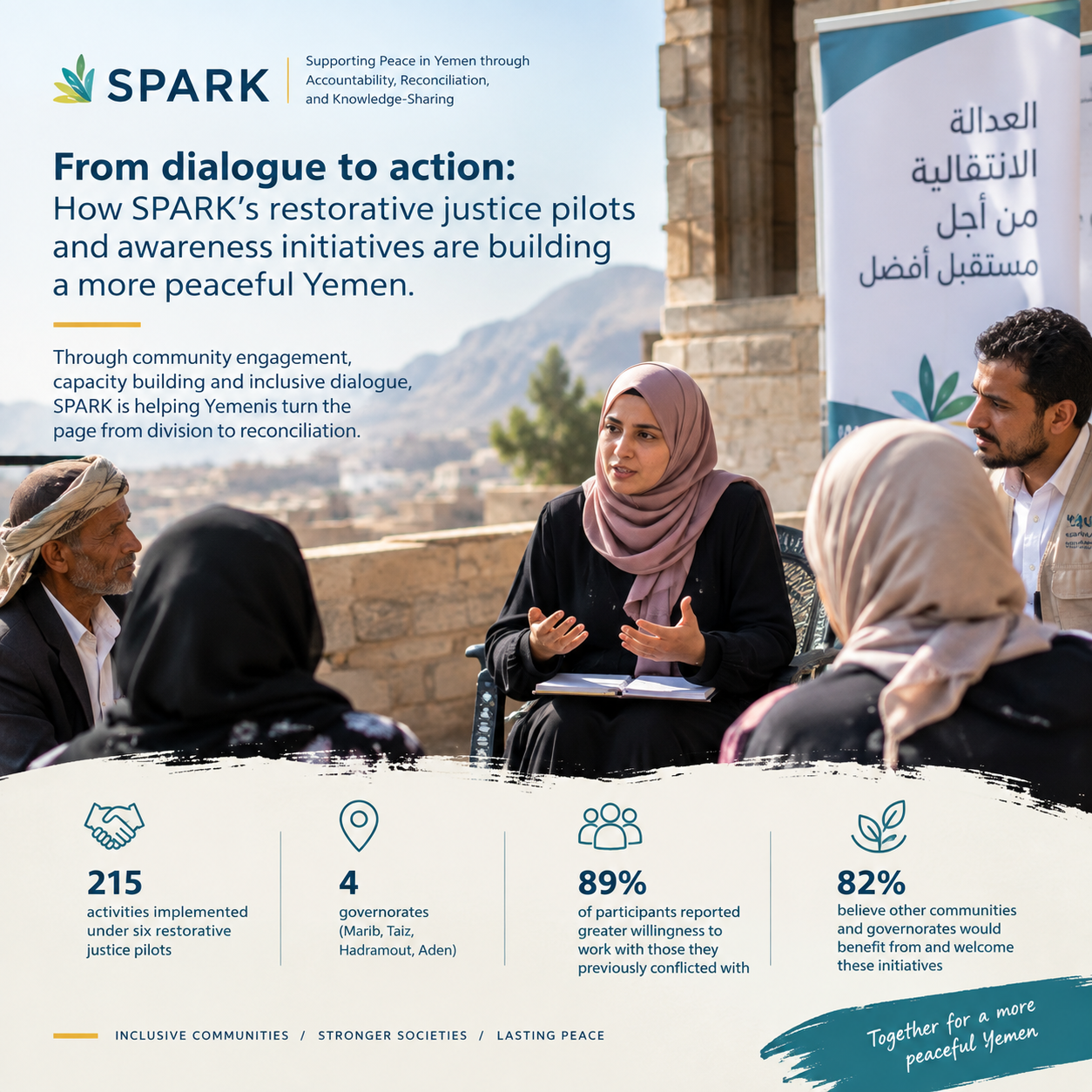
Published by DT Institute in partnership with SAM Organization for Rights and Liberties under the SPARK Project, the study explores how Chile’s experience with transitional justice offers valuable lessons for Yemen’s post-war recovery. It argues that Yemen’s repeated cycles of conflict and impunity make transitional justice essential to achieving truth, accountability, and sustainable peace. Drawing on Chile’s gradual transition after dictatorship, the study highlights the pivotal role of civil society and the Church in documenting violations, supporting victims, and preserving national memory—efforts that later enabled truth commissions, reparations programs like PRAIS, and memorial sites such as Villa Grimaldi. For Yemen, it recommends placing victims at the center of justice efforts, building unified documentation systems, establishing health and psychological support programs for survivors, and transforming sites of abuse into memorials of remembrance. The study concludes that, as in Chile, Yemen’s civil society can become the cornerstone of a people-led justice process that heals divisions, preserves truth, and rebuilds trust toward genuine national reconciliation.