1. Overview of the SPARK Program
Under the SPARK (Supporting Peace in Yemen through Accountability, Reconciliation, and Knowledge-Sharing) program, DT Institute and its local partners, the Abductees’ Mothers Association (AMA) and SAM for Rights and Liberties (“SAM”), launched raising awareness campaigns to complement restorative justice pilots and engage community members in Taiz and Aden.
The restorative justice pilots aim to foster reconciliation and resolve community-level public disputes that have caused human rights violations. While raising awareness campaigns educate community members on transitional justice mechanisms and engage experts and decision makers in thought provoking and effective dialogues and initiatives to advance Yemeni transitional justice.
This model was designed in response to the findings of The Path Towards Peace, a research study published by SPARK in April 2025. This study captured local understandings of transitional justice (TJ) across Yemen, revealing that 64.3 percent of community members prioritize reconciliation and war-ending efforts over retributive accountability. Moreover, it further revealed that 51 percent of the research sample had no knowledge of transitional justice at all – identifying a crucial need for education. Participants identified clear roles for civil society, including initiating dialogue and reconciliation, raising TJ awareness, and documenting violations.
In addressing these gaps, SPARK works to advance local and national reconciliation, by furthering initiatives to educate local stakeholders on transitional justice concepts. At the same time, the program builds resilience within divided communities through the pilots, which create sustainable pathways for dialogue and conflict resolution.
Through effective engagement, the program activates all segments of society – from the community level to civil society, experts, and high-level governmental stakeholders. This enables these groups to not only be participants, but central drivers of Yemen’s transitional justice journey. With donor support, these efforts can be scaled to reach more communities, ensuring that reconciliation and peace take root from the group up.
2. Initiative Spotlight: The Bridges of Justice Initiative
Transitional justice is sustainable, peace-building response to legacies of oppression, human rights violations, and unrest. It aims to facilitate whole-of-society reconciliation by providing societies with effective methods for recuperating from systematic violence and oppression. It does so by operating through a victim-led approach, compromising judicial and non-judicial remedies, including reparations, truth-seeking initiatives, institutional reform, and public memorialization and reunion.
In order to effectively address a country’s legacy of violations, transitional justice must be tailored to that specific context. This is because successful application of transitional justice ensures accountability, justice, and reconciliation are achieved to the satisfaction of society’s most vulnerable – the victims of the violations to be overcome.
However, every application of transitional justice requires posing – and answering – some of the most complicated questions in law, politics, and humanities. These questions are often delicate, involving further moral questions and innumerable dilemmas. Finding the proper balance between reconciliation versus justice and accountability measures to effectively and efficiently promote sustainable societal cohesion is not an easy task.
Nor is it one that can be done via a one-size-fits-all model. Rather, understanding what transitional justice tools to implement and how much requires a careful understanding of both the effective (and ineffective) application of transitional justice mechanisms and of the country’s unique contextual history.
💬 “Transitional justice is not merely a legal framework; it is a path for rebuilding the individual, the collective memory, and the homeland.” – SAM poster (shared via social media) amplifying the Rwanda study.
As a relatively new field, emerging in the 1980s, new research on transitional justice is continuously being sought and developed. As researchers have pointed out, such initiatives have found that some of the most well-known transitional justice mechanisms were, in fact, not successful in achieving their peacebuilding and reconciliation objectives. It has also been effective in detailing the harmful consequences of transitional justice procedures – whether successful or unsuccessful. These include re-traumatization and perceived “justice gaps.”
Application of transitional justice mechanisms in sensitive contexts, such as Yemen, requires careful coordination. Such coordination must be conducted with virtually all stakeholders, including community members, experts, civil society, non-governmental organizations, political components, authorities, and government institutions.
Many of these stakeholders represent marginalized individuals and victims at risk of re-traumatization. Thus, research on countries past experiences with transitional justice can be not only informative, but instrumental, to careful and effective application of transitional justice in sensitive contexts.
3. Agreement and Impact
Under SPARK’s Bridges of Justice Initiative, local partner, SAM sought to inform SPARK’s restorative justice pilots by launching two detailed studies of transitional justice experiences in other contexts. Both countries examined – Chile and Rwanda – experienced complex legacies of human rights violations that their societies are still grappling with today.
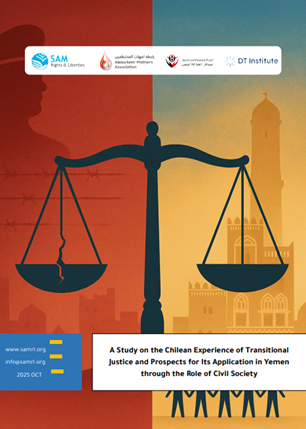
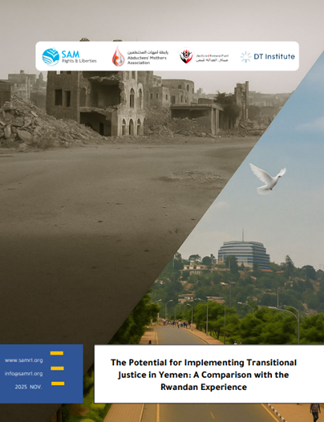
Chile’s experiences detail the country’s gradual transition after dictatorship, while Rwanda’s study details their recovery post-genocide. Such studies compared each of the countries’ situations to that of Yemen, analyzing similarities and differences in their cultural history and application of transitional justice mechanisms.
The first study, entitled A Study on the Chilean Experience of Transitional Justice and Prospects for Its Application in Yemen through the Role of Civil Society, explores Chile’s transitional justice experience, offering valuable lessons for Yemen’s post-war recovery, which it compares to Chile’s post-dictatorship period. The study argues that, following the fall of the dictatorship in Chile, its post-conflict transitional justice framework unfolded in gradual phases.
The paper further held that these phases achieved “relative success in healing societal wounds and addressing human rights abuses” through the integration and pivotal role of civil society and the church. Specifically, it highlighted the role of the church and civil society in monitoring and documenting human rights violations and supporting – efforts that later enabled the work of transitional justice mechanisms.
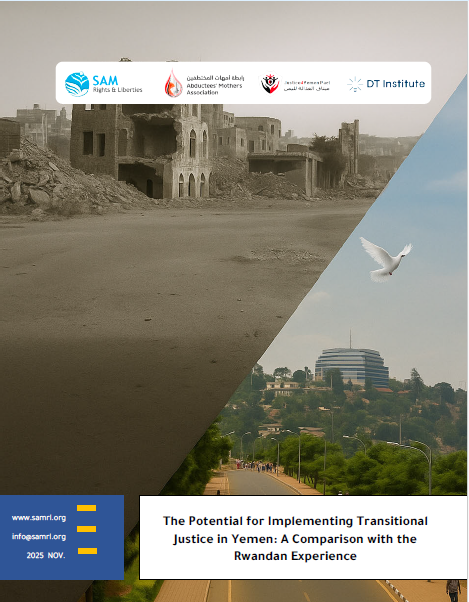
The second report analyzes Rwanda’s recovery after genocide, drawing lessons to be applied to Yemen’s post-conflict peacebuilding process. This study is entitled The Potential for Implementing Transitional Justice in Yemen: A Comparison with the Rwandan Experience. It found that although Yemen and Rwanda have varied histories – Yemen’s involving political conflict and fragmentation, while Rwanda’s unrest was rooted in ethnic violence and intolerance – Yemen could still significantly benefit from Rwanda’s transitional justice experience.
In fact, the study even found Rwanda’s cultural history itself may provide some lessons for Yemen’s own path towards justice and reconciliation. In exploring Rwanda’s history, the study analyzed their community-based justice systems (Gacaca), which were utilized under transitional justice to complement formal legal trials. In drawing comparisons between Gacaca and Yemeni tribal systems, it provided lessons for Yemeni transitional justice. which were utilized under TJ to complement formal legal trials.
In SAM’s own words, in sum “the studies helped challenge notions that have accompanied Yemen’s past political conflicts — particularly the idea that reconciliation means forgetting — by affirming that truth is not built on forgetting, but on acknowledging violations, listening to victims, and building a collective memory that protects society from repeating the tragedy.” SAM further highlighted that the studies contributed to “creating a shared language among local actors to discuss the future.” This assisted local stakeholders in moving past the binary of dominance and impunity and instead look towards a state grounded in the rule of law and respect for human dignity.
In this sense, SAM holds that the two studies represent a foundation step in building collective Yemeni awareness that recognizes confronting the past with courage as the necessary entry point for shaping a new social contract.
💬 “The importance of these two studies stems from their aim to redirect public awareness toward the concept of transitional justice and to emphasize that this path is neither an intellectual luxury nor merely an academic subject for research and debate. Rather, it is a fundamental pillar of stability that must be crossed as a bridge to restoring trust between the state and society.” – SAM for Rights and Liberties
4. Learning, Documentation, and Replication
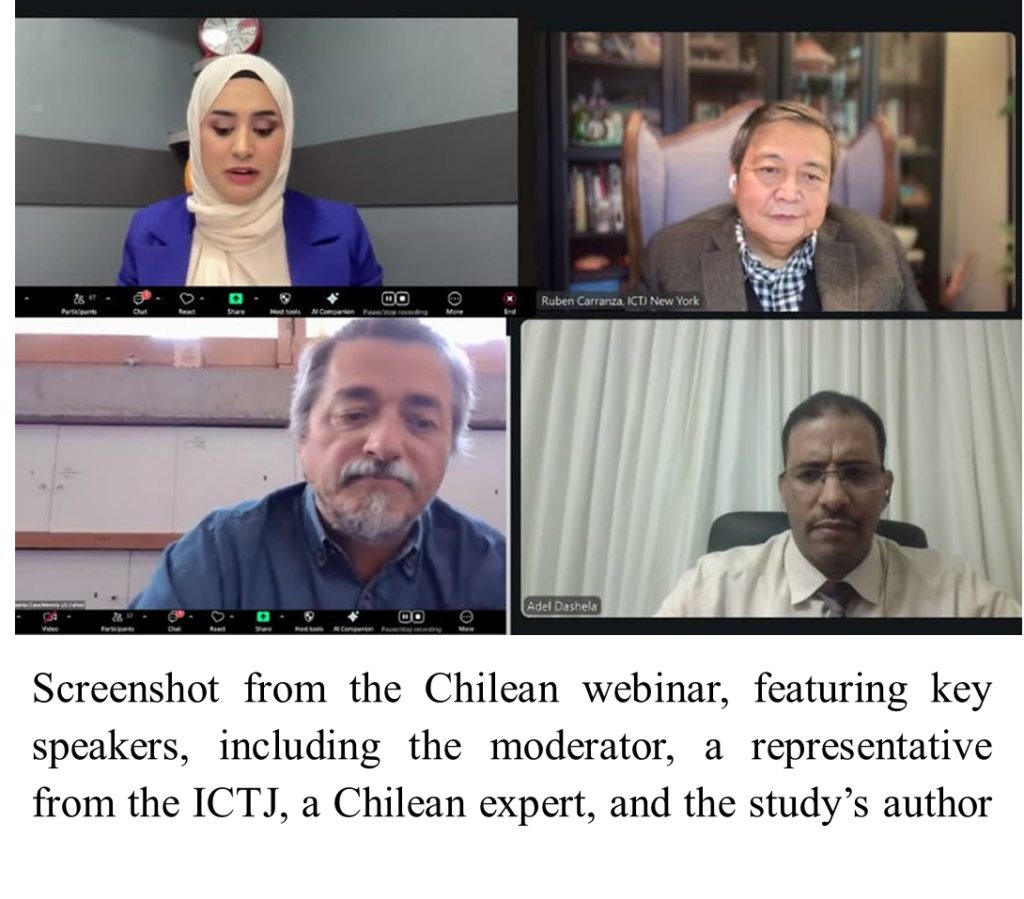
Both studies were launched in their own dedicated webinars, drawing over 80 participants in total. Such participants included the former Human Rights Minister of Yemen and several transitional justice experts, including from the International Center for Transitional Justice (ICTJ).
Within each webinar, experts discussed and debated the successes and shortcomings of Chile and Rwanda’s experiences, respectively. Experts connected each of their experiences to Yemen by exploring similar or divergent pathways for Yemeni transitional justice, as informed by their opinions of the researched countries’ frameworks. They also reflected on the importance of comprehensive restitution, truth, and memorialization to prevent future abuses, stressing that transitional justice processes must adapt to modern challenges, prioritize victims, and support civil society actors advocating for accountability despite repression.
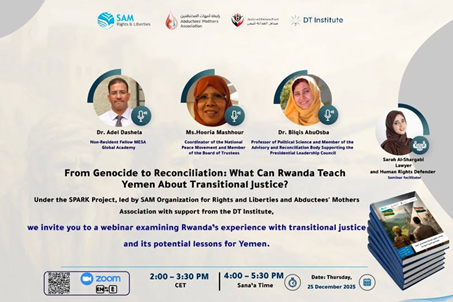
The webinars underlined the importance of transitional justice in any future peace agreement and the need for an inclusive national narrative that recognizes all victims, alongside a national transitional justice law aligned with international standards and the outcomes of the National Dialogue. They also reaffirmed victims’ rights to criminal accountability for serious violations and highlighted the importance of regulated tribal mechanisms, community-based restorative justice and reparations, and urgent institutional reform of the judiciary, security sector, governance bodies, and human rights education.
💬 “During the webinar[s]…, we observed that [the studies each] offered rich analytical material that help[ed] anticipate possible options for Yemen, especially with regard to truth-seeking, victims’ redress, the role of organizations in documentation, and guarantees of non-repetition. At the same time, the studies highlighted the differences between those experiences and the Yemeni reality, reinforcing the need to benefit from international lessons without replicating them and to localize these experiences in a way that considers the complexities of Yemeni society and its political and social structure.” – SAM for Rights and Liberties
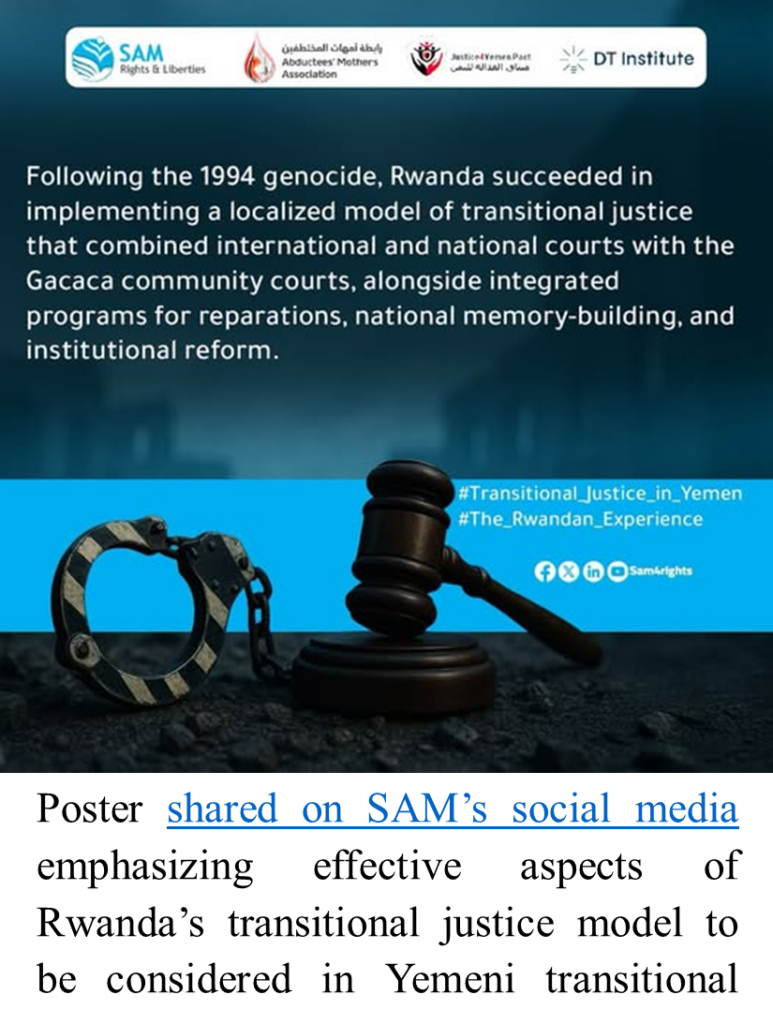
To maximize reach and knowledge-sharing, key findings and recommendations from each of the studies were summarized into short-form content shared via social media. These included awareness-raising posters as well as a short video. The short video documented the Chilean study in an accessible and visually engaging form effective for wider public dissemination.
Additionally, to draw public attention to the key findings and lessons learned, SAM published seven additional posters, highlighting important transitional justice concepts and lessons learned. Such posters stressed the political will required for transitional justice and the importance of building a national memory to prevent the repetition of violence.
5. Scaling the Impact
After over a decade of failed national peace talks in which victim and community needs were disregarded, the urgent need for victim- and community-led transitional justice is clear. The role of civil society and the goal of the SPARK program is to foster and provide the necessary skills, tools, and knowledge required by local communities to lead such transitional justice processes as part of Yemen’s national peacebuilding.
By raising awareness of transitional justice and engaging all transitional justice stakeholders, raising awareness campaigns foster community responsibility to operationalize transitional justice principles. They envision transitional justice efforts, rooted in local ownership, dignity, and dialogue, serving as foundations for broader restorative justice pilots and raising awareness initiatives.
“Transitional justice must always be victim-centered and context specific,” stated Lynn Arbid, Program Officer at DT Institute. “This is especially true in Yemen – where repeated cycles of violence have led to diverse human rights violations imposed upon victims and former perpetrators alike. Moreover, in Yemen, there are existing structures, like tribal dispute mechanisms, that could and should be leveraged by transitional justice processes to ensure the peacebuilding process is localized, personal, and effective.”
Through raising awareness campaigns, like the Bridges of Justice initiative, Yemeni transitional justice continues to be explored in thoughtful and innovative ways, building towards effective whole-of-society peacebuilding efforts. Continued engagement of diverse stakeholders and diverse perspectives on Yemeni transitional justice is needed to foster such effective national reconciliation and ensure engagement of all required segments of the population.