Overview
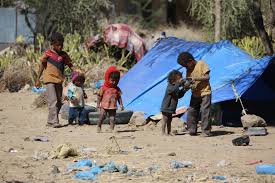
The ongoing conflict in Yemen has pushed the lives of millions of children into a cycle of daily challenges. Children have been surrounded by multiple risks and deprived of their basic rights, including access to education. These conditions have left them increasingly vulnerable to a range of serious violations.
Humanitarian indicators show that children in Yemen are experiencing extremely high levels of risk, including recruitment, sexual abuse, abduction, killing, maiming, and denial of humanitarian assistance. Reports further indicate that marginalized children in Yemen are among the most affected groups due to harsh social, economic, and political conditions. Most of these children belong to communities suffering from chronic poverty, social exclusion, and a severe lack of essential services — factors that expose them to a wide array of violations.
Given the scale of suffering faced by marginalized children in Yemen, there is an urgent need for comprehensive protection programs and interventions aimed at promoting their rights and safeguarding them from harm.
Within this context, and as part of the Supporting Awareness, Facilitating Enforcement of Children’s Rights in the Yemeni Conflict (SAFE II) program, implemented by the DT Institute in partnership with human rights organizations and international efforts to protect children from grave violations during armed conflict, the Insaf Center for Rights and Development issued a detailed investigative human rights report titled Children Without Protection. The report provides extensive documentation of serious violations against marginalized and internally displaced children in Yemen.
The report covers the period from June 2019 to February 2025 and monitors violations across six Yemeni governorates: Aden and Lahj (under the internationally recognized government), and Dhamar, Hodeidah, Amran, and Sana’a (under the control of the Ansar Allah group).
Saleem Al-Aghbaree, Project Manager at the Insaf Center for Rights and Development, stated:
“Marginalized children in Yemen are subjected to a series of interlinked violations rooted in poverty, discrimination, and the absence of state institutions. This combination leaves them among the most vulnerable and at risk.”
He added:
“Many of these children have been deprived of their right to education from their earliest years, either due to dire financial hardship or harmful social attitudes that exclude them from schools and push them into hazardous labor, whether in the streets, workshops, or informal sectors.”
Al-Aghbaree also noted that many marginalized children suffer from multiple forms of discrimination and violence, both within their homes and in their communities. These experiences result in long-lasting psychological effects. In addition, they lack access to basic services such as healthcare, adequate housing, and psychosocial support, deepening their marginalization and severely limiting their chances of living a dignified life in the absence of proper protection and oversight.
He continued by explaining that the prolonged armed conflict has made these children easy targets for recruitment and exploitation in dangerous roles that they neither fully understand nor are prepared for. Many are driven into these situations due to poverty, deception, or simply the lack of safe alternatives.
Al-Aghbaree emphasized the importance of documenting these violations through human rights and investigative reporting, such as the Children Without Protection report. He describes this process as a critical step toward exposing suffering that is often silenced or ignored by society and institutions.
He stressed that documentation transforms individual stories into structured evidence that can support advocacy efforts, enabling organizations and international bodies to better understand the scale of the situation. It also establishes a foundation for improving legislation and protection mechanisms, and for urging authorities to fulfill their responsibilities toward vulnerable populations.
He concluded:
“These reports are not merely records of suffering — they are tools for change, restoring recognition and dignity to children forced to live on the margins of society. They represent a first step toward accountability and a clear message to decision-makers that these children deserve to be seen and protected. Their rights are not optional; they are a legal and moral obligation that must be reflected in national policies and protection programs in Yemen.”
Scope and Nature of Documented Violations
A total of 45 serious violations against marginalized and internally displaced children were documented within the report. These included 22 cases involving marginalized children, 23 cases involving internally displaced children, five cases involving children who were both marginalized and displaced, and four cases involving children with disabilities.
The report highlights 16 cases of sexual assault and harassment: eight involving girls between the ages 7 to 15, and eight involving boys between the ages of 5 to 10. Among these victims were nine marginalized children, including one child with a disability. Additionally, two separate cases involved girls — one subjected to physical assault and the other denied access to humanitarian assistance.
Regarding child recruitment, the center documented 21 cases involving boys between the ages of 13 to 16, of whom 14 were marginalized children.
There were also six reported cases of abduction: two girls — one of them with a disability — and four boys between the ages of 14 and 15, all belonging to communities of internally displaced persons (IDPs). Three of these victims had intellectual disabilities. One abduction incident involved physical assault, while another was suspected to be linked to trafficking and organ exploitation.
Dr. Osama Abdulillah Salam Al-Asbahi, a child protection legal specialist and Chairman of the Lawyers Against Corruption network, explained that forced recruitment represented the highest rate of violations among boys. He noted that children of both genders were subjected to sexual violence, abduction, physical abuse, and denial of essential services. He stressed that these violations reflect a severe lack of accountability and oversight, constituting clear breaches of international humanitarian law and the Convention on the Rights of the Child.
Al-Asbahi emphasized that this investigative report from the Insaf Center for Rights and Development is not merely a document — it serves as a voice for affected children and a call to the international community for urgent action. He called for providing psychosocial support, ensuring access to education and healthcare services, ending forced recruitment, and conducting transparent and fair investigations into all violations.
Background
According to protection organizations, marginalized children in Yemen are among the most vulnerable segments of the population. They live in extremely harsh conditions and experience high levels of deprivation that continue to worsen as the war persists and the number of conflict actors increases. With the intensification of the conflict and the expansion of displacement zones, new patterns of risks have emerged, including family separation, an increase in gender-based violence, and the spread of dangerous survival mechanisms such as begging, working in exchange for food, and economic exploitation. Marginalized girls in particular face severe violations in the context of armed conflict, weak legal accountability, and the collapse of social protection systems.
Interlinked Violations
The report revealed systematic patterns of complex violations targeting marginalized and displaced children, where a single incident often involves multiple grave abuses occurring simultaneously. Insaf’s documentation team recorded cases of rape that were accompanied by abduction and threats of killing.
One of the documented cases involves a minor girl, identified as A.M.M., aged fourteen, who was abducted and raped while collecting plastic cans with her friend to help her mother cover household expenses. The incident began when a soldier affiliated with the Security Belt forces in Lahj stopped her and forcibly pulled her into his vehicle after she refused to comply. Although she returned home the same day, she and her mother were forced to remain silent due to threats from the perpetrator, ultimately leading them to flee the area.
The report also documented cases of child recruitment targeting marginalized children, preceded by economic exploitation and deception, and followed by long-term psychological trauma and permanent injuries. One of the cases involved a sixteen-year-old boy referred to as A.R.A., who was forcibly recruited by the Houthi group. According to his mother, his father consented to recruitment in exchange for a promised financial reward to support the family’s needs. The boy returned after a month and a half with no compensation and suffering from severe psychological distress.
The report further highlighted violations against children with disabilities, where they were subjected to deliberate denial of humanitarian assistance, forced labor, and neglect.
Causes of Violations
Poverty, absence of a family breadwinner, or the inability of caregivers to provide for children played a major role in most of the documented violations, pushing children into the streets to seek income, thereby exposing them to assault, abduction, and other forms of abuse. Economic hardship also led some families to consent to the recruitment of their minor children. The lack of proper family guidance and continuous support made children easy targets for armed groups that exploited them for military purposes.
Abuse of power by influential actors affiliated with conflict parties in Yemen further complicated accountability efforts, as victims and their families frequently faced intimidation. According to field monitor, Taḥreer Al-Mashhoor, these grave violations pose a direct threat to the future of children and society, with severe psychological and physical consequences that influence their development and long-term well-being. She emphasized that the war has been the primary factor increasing children’s vulnerability to violations, as many have lost one or both parents due to bombardment, killing, or enforced disappearance.
Forced displacement has also driven children from their homes in search of safety; however, this movement has not been free of danger. Children continue to face heightened physical and psychological threats and live in unstable environments lacking adequate protection.
Intervention
The Insaf Center for Rights and Development documented and analyzed major violations against marginalized children, drawing on specialized human rights reporting. The investigative report reviewed all forms of grave violations, including sexual violence, killing, maiming, recruitment, abduction, and the denial of humanitarian aid. Each section of the report presents key findings followed by real case studies and legal analysis.
The center worked to identify perpetrators, their affiliations, the methods used in committing violations, and the context and motives behind each crime. Insaf committed to strict standards of accuracy, neutrality, and objectivity, relying on testimonies from victims themselves, first-degree relatives, and eyewitnesses, while excluding any doubtful sources.
Additionally, the Center selected six major cases of grave violations against children, three of which have already been submitted to international accountability mechanisms. Work continues to complete the submission process for the remaining cases to ensure victims’ voices are heard and their access to justice is supported.
On the advocacy and media level, the team employed traditional and digital communication platforms to highlight the plight of marginalized children. Radio programs and television broadcasts were used to generate public discussion and engage relevant stakeholders in supporting community-based advocacy efforts. Digitally, the Center launched the Awareness Platform as a media space dedicated to raising awareness on children’s rights and exposing violations affecting the most marginalized groups. Written human stories and case studies were also developed to elevate public awareness and encourage decision-makers to take action to protect children’s rights.
Monitoring and Documentation Methodology
Insaf trained six specialized researchers in monitoring, documentation standards, human rights, and grave violations against children. Data collection relied on forms and templates designed according to the Monitoring and Reporting Mechanism established by the UN Security Council in 2005. These forms included victim information, social background, details of the incident, the identity and affiliation of perpetrators, and the likely motives behind the violations.
Documentation was carried out through field visits, direct interviews with victims, families, and witnesses, and follow-up of legal proceedings with police and courts. Coordination was also conducted with national and international organizations including the Ministry of Human Rights, the National Committee for Investigating Allegations of Human Rights Violations, UNICEF, Save the Children, and Geneva Call. All cases were recorded with informed consent from the victim or guardian, and pseudonyms were used to preserve identities. Some cases required ongoing legal observation through law enforcement channels.
Strengthening Protection and Justice
Beyond reporting incidents, the investigation aimed to analyze the underlying causes of violations and present a comprehensive understanding of the marginalized community’s reality through field testimony and contextual analysis. The report exposed hidden spaces where violations occur, far from media oversight and official follow-up, bringing these cases into public debate and contributing to increased awareness among local communities, authorities, and international organizations.
Expanding Impact
Insaf, in partnership with the DT Institute, continues to intensify community and human rights pressure on authorities and all conflict actors, urging urgent reforms, fairer policies, and practical measures to protect marginalized people and reduce violations. The documented evidence lays a foundation for future legal actions at both national and international levels and helps prevent perpetrators from escaping accountability. The report also provides marginalized communities with a platform to express their suffering, reinforcing their recognition and encouraging their participation in decision-making processes that concern their rights.
Challenges in Data Collection
The monitoring teams encountered numerous challenges and risks while interviewing victims and collecting data. Many families were reluctant to speak due to fear of retaliation by armed groups involved in the violations. Cultural stigma and fear of reputation damage also discouraged families from disclosing information, especially when violations included sexual violence. In addition, access to certain areas and cases was hindered by unsafe roads and security threats.
A Powerful Advocacy Tool
The investigative findings confirm that violations against marginalized communities are not isolated events but rather the cumulative result of long-standing discrimination and limited access to basic rights. Systematic documentation has improved understanding of the nature and drivers of these violations and enabled targeted recommendations aligned with the needs of the most vulnerable groups. The professional presentation of data strengthened the credibility of the findings, making the report a powerful advocacy tool. It brought the attention of decision-makers and stakeholders to the struggles of marginalized communities and demonstrated that professional documentation can promote change and ensure the voices of frequently overlooked groups are not ignored.
Recommendations
- Ensure fair and non-discriminatory access for marginalized children to essential services, including education, healthcare, and legal protection, particularly in conflict-affected areas.
- Integrate the needs of marginalized children into recovery and reconstruction plans, allocate adequate resources, and design interventions that take their social and economic conditions into account.
- Strengthen legal protection for victims, their families, and witnesses, while maintaining communication with international organizations concerned with children’s rights.
- Provide urgent psychosocial support to affected children and their families.
- Pressure all conflict parties to end all forms of child recruitment in accordance with international standards, including:
o The Convention on the Rights of the Child (CRC)
o The Optional Protocol on the Involvement of Children in Armed Conflict
o The Rome Statute of the International Criminal Court
o The International Labour Organization (ILO) Worst Forms of Child Labour Convention
while ensuring rehabilitation, reintegration, and accountability for those involved.
- Establish an independent and transparent accountability mechanism for violations committed by all conflict parties, ensuring protection of witnesses and victims, and preventing impunity.
- Strengthen coordination between UN agencies and Yemeni organizations to ensure that documented violations are included in international reporting.
- Provide economic and livelihood support for marginalized children and their families to reduce the root causes of violations.
- Support national and local transitional justice mechanisms with a focus on children as both victims and active participants.
- Restructure and unify military and security formations under state institutions in accordance with professional and human rights standards.