1. Overview of the SPARK Program
Under the SPARK (Supporting Peace in Yemen through Accountability, Reconciliation, and Knowledge-Sharing) program, DT Institute and its local partners, the Abductees’ Mothers Association (AMA) and SAM for Rights and Liberties (“SAM”), launched raising awareness campaigns to complement restorative justice pilots and engage community members in Taiz and Aden.
The restorative justice pilots aim to foster reconciliation and resolve community-level public disputes that have caused human rights violations. While raising awareness campaigns educate community members on transitional justice mechanisms and engage experts and decision makers in thought provoking and effective dialogues and initiatives to advance Yemeni transitional justice.
This model was designed in response to the findings of The Path Towards Peace, a research study published by SPARK in April 2025. This study captured local understandings of transitional justice (TJ) across Yemen, revealing that 64.3 percent of community members prioritize reconciliation and war-ending efforts over retributive accountability. Moreover, it further revealed that 51 percent of the research sample had no knowledge of transitional justice at all – identifying a crucial need for education. Participants identified clear roles for civil society, including initiating dialogue and reconciliation, raising TJ awareness, and documenting violations.
In addressing these gaps, SPARK works to advance local and national reconciliation, by furthering initiatives to educate local stakeholders on transitional justice concepts. At the same time, the program builds resilience within divided communities through the pilots, which create sustainable pathways for dialogue and conflict resolution.
Through effective engagement, the program activates all segments of society – from the community level to civil society, experts, and high-level governmental stakeholders. This enables these groups to not only be participants, but central drivers of Yemen’s transitional justice journey. With donor support, these efforts can be scaled to reach more communities, ensuring that reconciliation and peace take root from the groud up.
2. Conflict-Related Displacement Fostering Additional Difficulties in Accessing Public Services in Marib
Yemen’s conflict has raged on for over a decade, amplifying the suffering of millions of internally displaced persons (IDPs), a number which has steadily increased since 2019, according to the United Nations Office for the Coordination of Humanitarian Affairs (OCHA). In 2026, OCHA also stressed that 92 percent of IDPs in Yemen cannot afford rent and face eviction risks, while 1.6 million IDPs live in informal sites as a last resort.
Such informal sites include public and government buildings, which IDPs have sought as shelter due to the ongoing conflict, their pervasive forced displacement, and the absence of sustainable housing solutions. This is a significant issue in Marib, which hosts the largest number of newly displaced households among Yemen’s governorates, according to the International Organization for Migration (IOM).
As a consequence of their displacement to public and government buildings, the operation of public facilities, including health and education services, has been disrupted. This has led to mounting tensions between host communities and IDPs, which were already high due to the significant IDP presence within the area, as host communities complain of increased inability to access basic services.
These issues are emphasized by Marib’s enormous population increase since 2015 – from approximately 350,000 in 2015 to over 2 million in 2023 and still growing in 2025, as noted by the IOM’s Yemen Crisis Response Plan 2026. Populations within the governorate have also expressed high demand for functional health facilities, according to a March 2026 report put forth by the Planning and International Cooperation Office in Marib.
As Najla Fadel from AMA explains, “Since the beginning of the conflict, Marib city became a safe haven for hundreds of thousands of displaced people from across the country, especially from neighboring governorates controlled by the Houthi group. As a result of this influx, the limited resources of the existing displacement camps could not accommodate all the displaced, forcing them to occupy some government buildings in the hope that the war would end soon and they could return to their home governorates. However, the conflict has now dragged on for more than ten years, disrupting the services these facilities used to provide.”
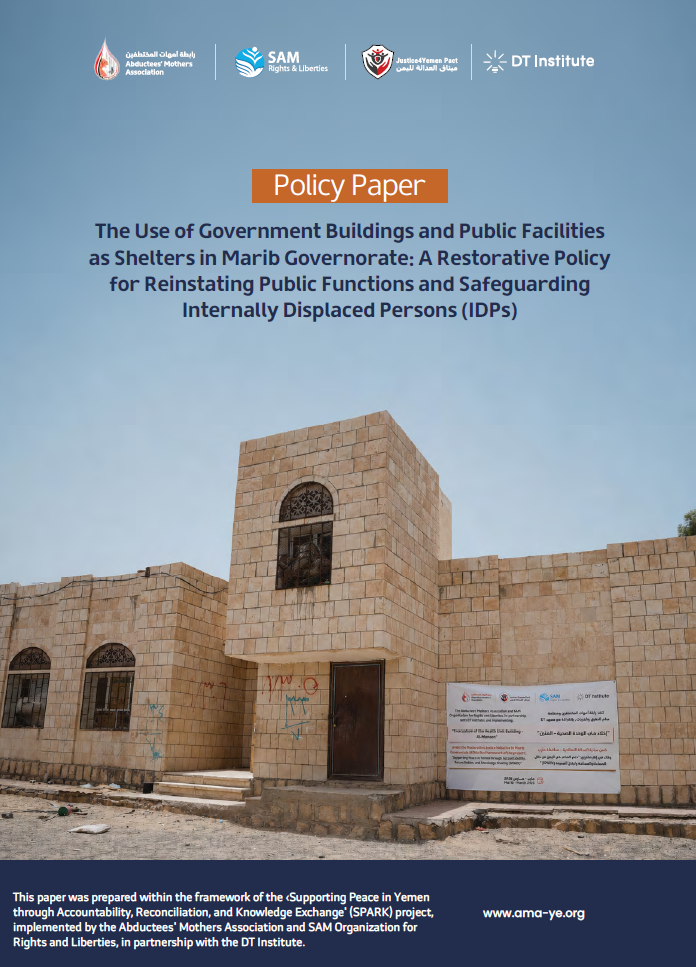
💬 “The health unit building in the Al-Maneen area, which serves more than 25,000 people, is now occupied by displaced individuals. They [individuals seeking medical care] have to travel long distances to reach the nearest health unit to receive essential health services such as childhood vaccinations, prenatal care, and other services.” – Najla Fadel, AMA.
3. Initiative Spotlight: The Marib Restorative Justice Pilot
Under SPARK’s Marib Restorative Justice Pilot, SPARK partners, SAM and AMA launched a multilateral response initiative to address these ongoing and urgent needs and challenges. The initiative utilizes a participatory approach, acknowledging and addressing the complex interplay of humanitarian, legal, and social concerns tangled up within these challenges. Furthermore, it seeks to strike a balance between the rights of IDPs and the overarching public interest maintained by the local government in serving its people.
This approach works to ensure the fundamental human rights of all those involved, including the right to security of person for IDPs and the right to a standard of living adequate for health and well-being (which includes medical care and necessary social services) for all those involved. Both of these rights are promulgated within the Universal Declaration of Human Rights (UDHR), which sets out a common standard of achievement for all peoples and all nations.
In doing so, the pilot supports the provision of dignified alternatives for displaced families, such as temporary housing units and essential services, through coordination with the Executive Unit for IDPs, local authorities, and humanitarian organizations. It also seeks to reduce community tensions by countering hate speech and rumors surrounding these subjects and restore social cohesion.
“The dignity of displaced people is a red line; every intervention must start and end with it.” — One of the Participants in the kick-off workshop
💬 “The dignity of displaced people is a red line; every intervention must start and end with it.” — One of the Participants in the kick-off workshop
4. Agreement and Impact
The Marib Restorative Justice Pilot was launched in February 2026 and has already made critical strides resulting in tangible and lifechanging solutions. Starting in early February, a community committee consisting of five influential locals was formed to oversee implementation and actualize the goals of this initiative.
The structure of this committee is modeled after SPARK’s Community Consensus and Reconciliation Committee (CRCC) in Taiz. Through the creation and implementation of the CRCC, SPARK partners have enjoyed great successes by leveraging local community leaders and influential community figures, who make up these committees. The use of already-engrained community members, leaders, and influential figures has lent credibility to similar restorative justice pilots in Taiz by facilitating trust-building and increasing community buy-in. Under this initiative, the Marib-centric community committee has already demonstrated similar impacts.
The committee immediately took control by initiating detailed documentation efforts, including field visits and discussions with government officials, residents, and IDPs throughout the area. In under one month, such documentation has revealed the presence of approximately 1,141 displaced families, which have taken shelter in eight public buildings. These buildings include the Safer Gas Company, a university dormitory, the Youth and Sports House, a local community college, a local council, a museum, the Health Unit of Al-Maneen Area, and a Saba University building.
The large number of displaced families identified within such a short amount of time underscores the great task ahead. Their displacement has significantly disrupted public services. It has limited access to education due to their living within key buildings required for education services, most notably the Saba University building, as well as a university dormitory and local community college. Furthermore, it has deteriorated the ability to obtain administrative support and implementation of community programs.
Most significantly, the ongoing displacement of families in Marib has resulted in significant disruption and dire consequences in the healthcare sector. As noted by a representative from the Health Unit of Al-Maneen Area in a SPARK-organized dialogue session, the Health Unit’s inability to provide essential medial services has directly resulted in the deaths of three children. The representative utilized this example to underscore the urgent need to restore the Health Unit. Moreover, host community members have expressed a high demand for restoration of the Health Unit and Saba University.
💬 “The [new] building at Saba University, the only public university in the governorate, is… occupied by displaced people. Students (both displaced and from the host community) are crammed into small halls, because the local authority had allocated the building for the university’s expansion, which has already received more students than its capacity allows.” – Najla Fadel, AMA.
Accordingly, AMA and the community committee have identified these as priority buildings, immediately launching advocacy and coordination efforts in February to facilitate evacuation.
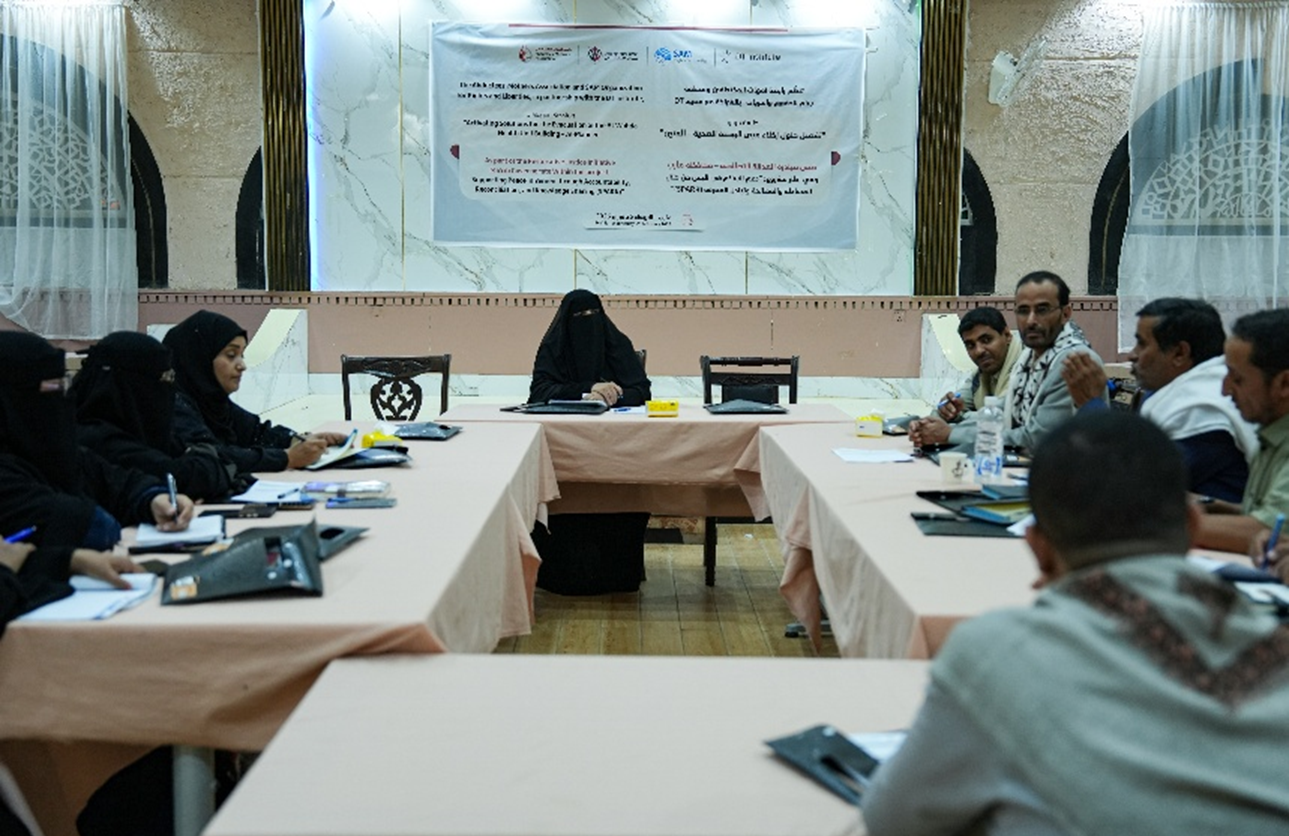
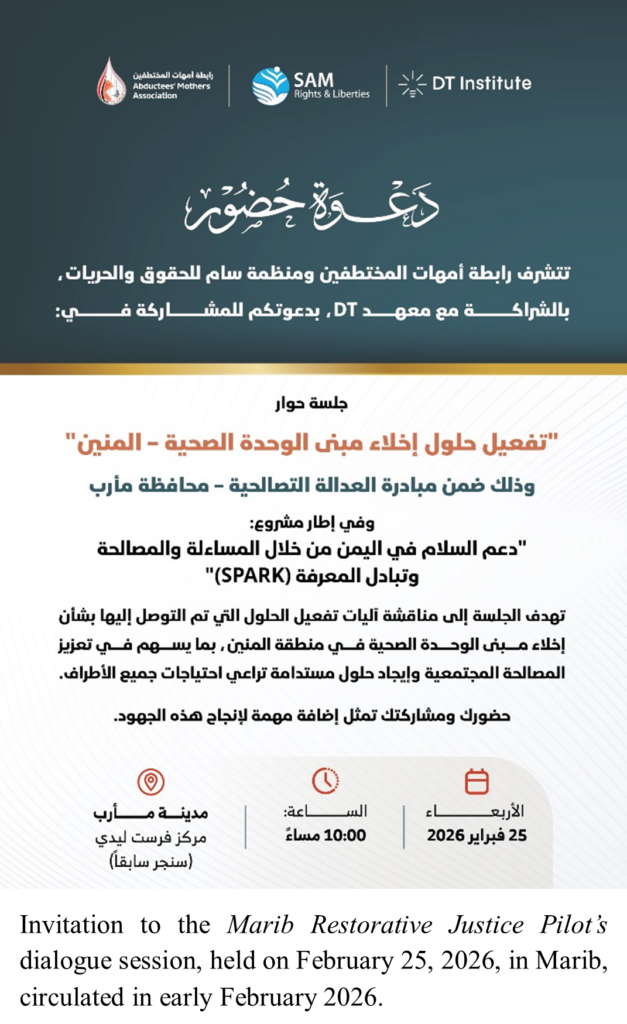
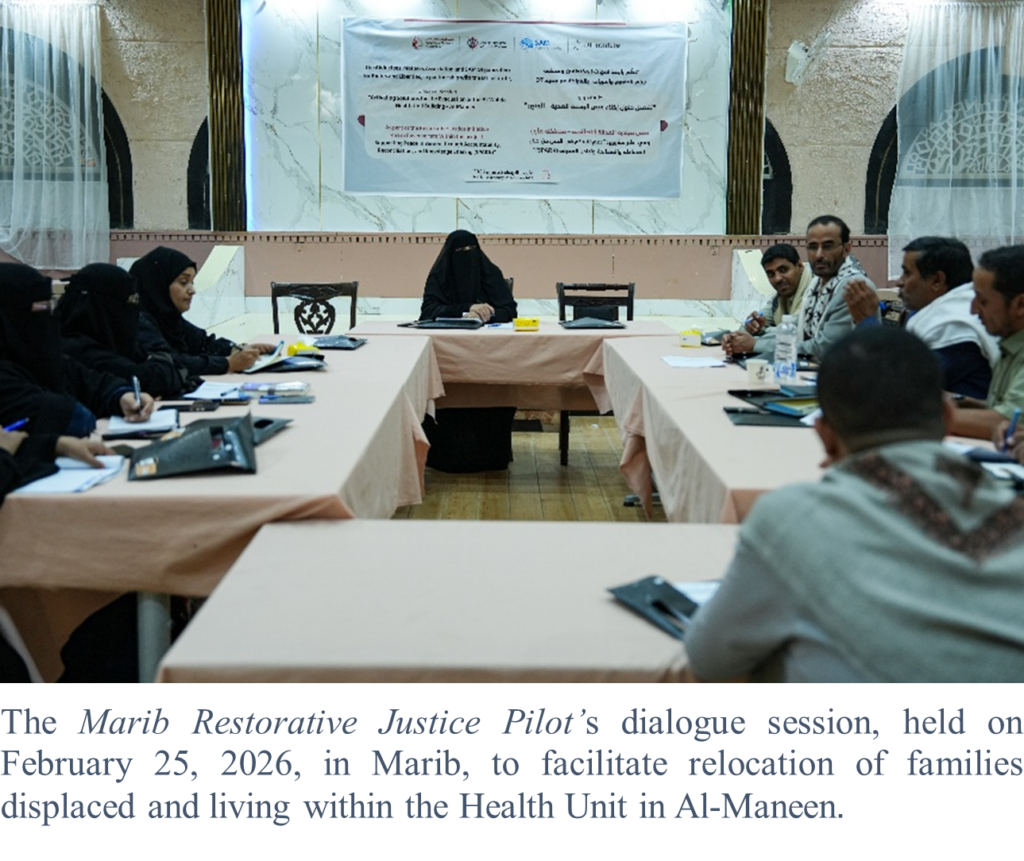
In doing so, AMA organized a dialogue session with nine key stakeholders, including representatives from the Health Unit, the Executive Unit for IDPs andthe community committee, s. This dialogue session was facilitated as a follow-up to AMA’s kick-off workshop (discussed in the next section) to initiative implementation of relocation efforts from the Health Unit in Al-Maneen Area. Additional meetings between AMA, the community committee, IDP representatives, and the local authority were also held to facilitate IDP relocation.
During the dialogue session, a representative from the Health Unit underscored the urgent need for this initiative by illustrating the real-time effects of the Health Unit’s occupation on the local population. This included exposure of pregnant women to greater risks through home deliveries, endangering the lives of both mother and child. This also included patients being forced to undergo long wait times for minor but significant medical interventions, such as therapeutic injections, due to the unavailability of the Health Unit, requiring them to travel long distances to the nearest functioning health facility.
As a result of the session, the local authorities offered financial assistance to support relocation of displaced families. The shelter cluster representative similarly expressed its readiness to support shelter solutions for IDPs after Ramadan had concluded. Additionally, the legal expert, Mohamed Modhesh, agreed to prepare a formal document outlining the responsibilities and expectations of each of the parties in attendance. Participants also agreed that the representatives from the community committee, Executive Unit for IDP Management, and Health Unit officials should be present to oversee the evacuation and relocation procedures from the Health Unit.
Thus far, AMA and the community committee have succeeded in identifying and obtaining three prepared shelters through coordination with the community committee, Executive Unit of IDPs, Shelter Cluster, and local authorities. These shelters are able to accommodate two of the four families currently residing in the Health Unit. However, AMA is still working to secure an additional two units to house the remaining two families currently displaced to the Health Unit and additional shelters for the four families occupying the Saba University building.
One of the central challenges in this initiative was the lack of dedicated resources set aside to support the safe and dignified relocation of IDP families currently occupying public buildings. The absence of funding for transportation, furniture and IDP belonging relocation, and other associated relocation costs creates barriers to voluntary movement of IDPs. This risked delay of restoration of critical public services, including health and education services, and additional hardships for already vulnerable populations.
To mitigate these risks, AMA strengthened coordination with humanitarian partners, local authorities, and service providers to mobilize complementary support and in-kind assistance. The relocation shelters provided are Conex housing units. AMA, in coordination with the community committee and other organizations, is currently preparing these units for family needs by working with such partners. In doing so, AMA is coordinating with local humanitarian support organizations to build kitchens and assist in moving IDP families’ belongings. Additionally, AMA and the community committee are working to obtain flexible funding mechanisms and small relocation support packages to ensure that transitions are conducted in a conflict-sensitive, dignified, and timely manner.
Another challenge arose from IDP families lack of awareness. Some displaced families within the Health Unit refused to evacuate to the prepared shelters, because they were afraid of losing their right of reparation for the loss of their permanent housing. To diffuse their concerns and overcome their hesitation, AMA and the community committee conducted awareness raising efforts by combining community engagement, dialogue sessions, and targeted outreach to affected populations to explain risks, legal considerations, and available alternatives.
This engagement was facilitated for groups and individual families via formal and unstructured/informal means to facilitate understanding and meet the needs of IDP community members. In doing so, AMA has actively mobilized the local community committee and influential community figures to ensure messaging is trusted, culturally appropriate, while also strengthening coordination with humanitarian actors working on emergency shelter and housing solutions to provide viable relocation options.
💬 “One of the main challenges [in this initiative] was [participants’] lack of awareness. [I]n Marib, it took time to…explain the rights of IDPs, both to the community and to the local authorities.” – Najla Fadel, AMA.
4. Learning, Documentation, and Replication
To develop a structured, actionable, and effective mechanism to respond to the occupation of key public facilities and facilitate the voluntary and safe relocation of IDPs, AMA initiated formal coordination between local authorities, humanitarian organizations, and other relevant stakeholders. In doing so, AMA held a kick-off coordination workshop, bringing together 22 key stakeholders, including representatives from the local authority, and local and international humanitarian organizations.
Key participants within the workshop included members of the community committee, the Director General of the Office of Planning and International Cooperation, the Director General of the Public Health and Population Office, a representative of the Director General of the Social Affairs and Labor Office, and representatives from the Shelter Cluster and Norwegian Refugee Council (NRC).
The workshop was the first of AMA and the community committee’s ongoing efforts to address the local authority’s stated “emergency measures” in sheltering displaced families. It was led by the Assistant Director of the Executive Unit for the Management of IDP Camps in Marib Governorate, Dr. Khaled Al-Shajni.
Within the workshop, a representative of the local authority highlighted AMA’s goals in restoring government facilities to their proper roles to facilitate education, health, and administrative services, while also respecting the human rights of IDPs. In his words, their work must be guided by the goals of “preserving human dignity and the authority of the state.”
In doing so, workshop participants discussed several critical obstacles that must be overcome. These included discrepancies between attending organizations in the number of IDPs recorded, the absence of a precise registration system leading to a sudden increase in the number of IDPs upon the announcement of solutions, and the difficulty of relocating families into sustainable and well-equipped shelters. As one participant in the kick- off workshop noted, “he absence of accurate data opens the door to manipulation.”
💬 “We are here today at an important event to discuss a sensitive issue: the evacuation of government buildings occupied by displaced persons. Our guiding principle is how to preserve the dignity of the displaced and provide them with safe housing, while simultaneously maintaining the state’s authority and restoring these institutions to serve the community.” – Engineer Saleh Al-Saqqaf, Director of Planning and International Cooperation in Marib.
As a result of the workshop, the parties agreed to several next steps. These included implementation of a collaborative model to implement this initiative. This model will proceed in four phases, namely, (1) enumeration and verification of the number of IDPs and their occupation of public buildings; (2) alternative planning to locate housing shelters for relocation of displaced families; (3) outreach and agreement from the relevant entities, organizations, and owners of buildings, land, and services to facilitate effective relocation; and (4) gradual relocation and post-relocation follow-up.
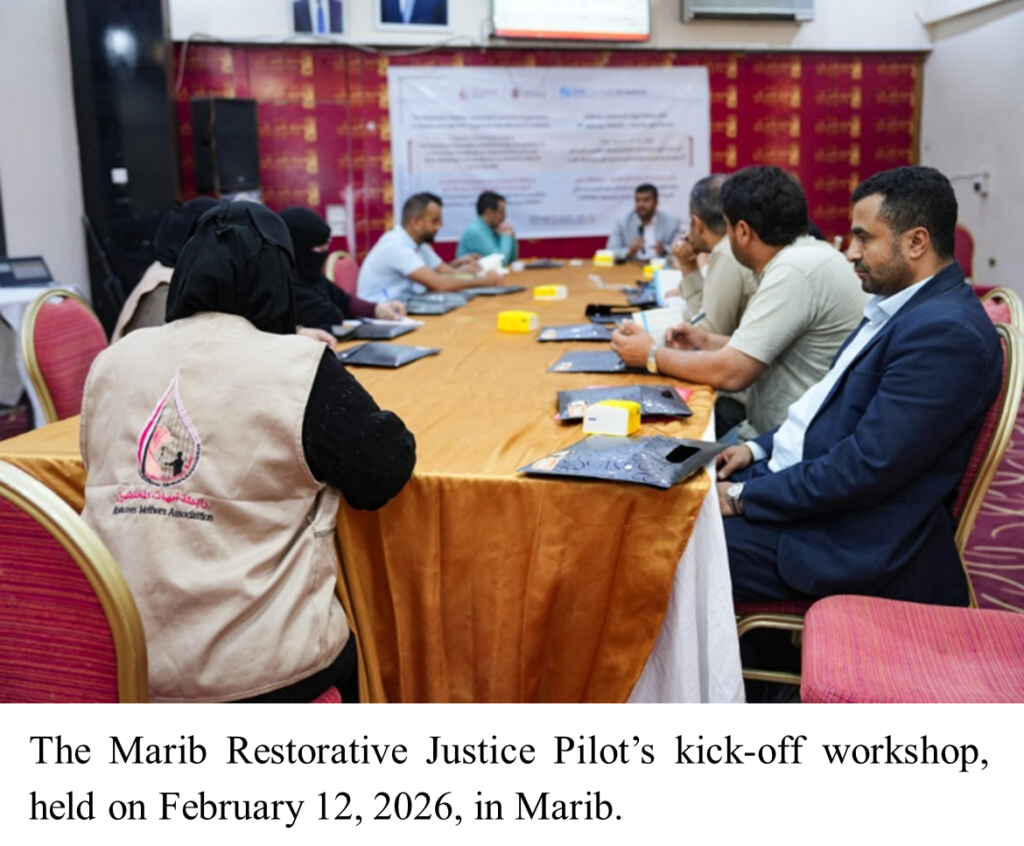
Under the first phase of this model, participants agreed to immediately begin efforts to prepare a comprehensive final record of the number of displaced families in the presence of the relevant authorities. These lists will be subject to official approval to ensure issuance of formal records, detailing all beneficiaries. Furthermore, participants agreed to set a reference date after which no additional IDP names may be added to coincide with the formal announcement of the restorative justice pilot.
Moreover, the workshop has already generated excitement and interest surrounding the initiative, including from key international organizations, such as the International Civil Society Action Network (ICAN). ICAN posted about the workshop on the X platform, drawing further attention to the initiative and demonstrating their interest. Such posts generate opportunities for collaboration and coordination with international and local organizations who share the pilot’s objectives in supporting the safe and dignified transfer of IDPs.
5. Risks and Safeguards
The implementation of the Marib Restorative Justice Pilot involves several operational, protection, and perception-related risks that require continuous mitigation. A key risk is the potential for unintended harm to displaced families if relocation processes are perceived as coercive rather than voluntary, which could undermine trust in the intervention and increase vulnerability among already affected populations.
💬 “Temporary solutions create permanent challenges.” – A participant in the Kick-off Workshop.
There is also a risk of secondary displacement or service disruption if alternative shelter solutions are not adequately prepared or sustainably maintained. In addition, competing priorities among stakeholders, including authorities seeking restoration of public services and humanitarian actors prioritizing protection outcomes, may create coordination challenges and slow decision-making.
The safe, dignified, and successful relocation of IDP families is a complex activity, especially under the later (third and fourth) stages. It requires engaging national-level authorities and decision makers required to authorize the restoration of public buildings. The process of negotiation, approvals, and coordination among multiple stakeholders, including government representatives, camp management and IDP communities, requires sustained dialogue and trust building. This takes time and may easily extend beyond initial project timelines, which can delay implementation and limit the scale of impact.
💬 “The success of an intervention is measured by the quality of the alternative, not the speed of the evacuation.” – A participant in the Kick-off Workshop.
To address these risks, the pilot applies a “Do No Harm” approach, ensuring that all relocation processes are voluntary, informed, and conducted with full consultation of affected families. Continuous dialogue with IDP representatives and community leaders is used to validate decisions and reduce misinformation. The initiative also prioritizes phased implementation, ensuring that alternative shelters are fully functional before any movement takes place.
Additionally, the pilot adopts a phased and adaptive approach, allowing for longer engagement periods and continuous dialogue facilitation. Moreover, strengthening relationships with key authorities, leveraging local intermediaries (including the community committee), and aligning the pilot with broader government priorities will help accelerate decision-making processes. This will support sustainable outcomes on shorter timelines.
Finally, communication safeguards are being strengthened through careful language use and proactive community engagement to prevent misinterpretation of the pilot’s objectives and to maintain public trust in both the process and outcomes. AMA will be publishing several posts, including a documentary video, illustrating the pilot in detail. The video will document the relocation process and show IDPs safe and dignified transfer to suitable shelters. These posts will provide reassurance to the public by illustrating AMA’s “Do No Harm” approach in tangible and illustrative ways.
6. Scaling the Impact
After over a decade of ongoing conflict contributing to further displacement of families and civilians all throughout Yemen, the necessity of similar pilots and initiatives is clear. Such displacement continues to affect community services and resources as IDPs throughout Yemen continue to live within public buildings. Similar to the situation in Marib, these accommodations were intended to be temporary but became prolonged due to the continuing conflict.
“Lasting impact in protracted displacement contexts such as Yemen and Syria is defined by moving beyond temporary coping systems toward durable solutions, including ambitions like the ‘zero camps’ approach in Syria and emerging opportunities from de-escalation in Yemen,” explained DT Institute’s Senior Program Manager, Feras Hamdouni. “It means progressively reducing reliance on public buildings and informal settlements, strengthening the role of government institutions, and leveraging moments of relative stability to scale pilot initiatives into sustainable, system-wide and locally owned solutions grounded in dignity and reality.”
Accompanying the ongoing conflict is over a decade of failed national peace talks in which victim and community needs have continuously been disregarded. This further underscores the urgent need for victim- and community-led transitional justice. The role of civil society and the goal of the SPARK program is to foster and provide the necessary skills, tools, and knowledge required by local communities to lead such transitional justice processes as part of Yemen’s national peacebuilding.
By raising awareness of transitional justice and engaging all transitional justice stakeholders, raising awareness campaigns foster community responsibility to operationalize transitional justice principles. They envision transitional justice efforts, rooted in local ownership, dignity, and dialogue, serving as foundations for broader restorative justice pilots and raising awareness initiatives.
Not only do these initiatives envision community ownership and national participatory transitional justice, but they also actualize these efforts. Through initiatives such as the Marib Restorative Justice Pilot, SPARK implements effective local level transitional justice initiatives that prioritize critical and urgent community needs. Moreover, these initiatives prioritize collaborative triple nexus approach (combining humanitarian, development, and peace objectives) entrenched in the principles of “Do No Harm” to respect human dignity.
This pilot exposed a notable coordination gap among humanitarian partners, which it is now addressing – as required in order to create sustainable solutions to IDP displacement, current residence within government buildings, and the blocking of public services. Participants in the Kick-Off Workshop highlighted this challenge. “Partnership and coordination among clusters in humanitarian work are not optional — they are essential,” one participant stressed.
“Restoring public buildings is essential for strengthening governance and public services, while also ensuring dignified, adequate housing for communities, returnees, and IDPs,” explained Sahar Mohammed, DT Institute’s Program Assistant. “This experience highlights the need for future initiatives to integrate human rights, humanitarian assistance, and development—the triple nexus—so that both immediate needs and long-term public service development are effectively addressed.”
Through restorative justice pilots, like the Marib Restorative Justice Pilot, Yemeni transitional justice continues to be explored and facilitated in thoughtful and innovative ways, building towards effective whole-of-society peacebuilding efforts.