The Yemeni Coalition for Monitoring Human Rights Violations (YCMHRV) launched a landmark study examining how media disinformation fuels violations against children in Yemen and obstructs accountability.
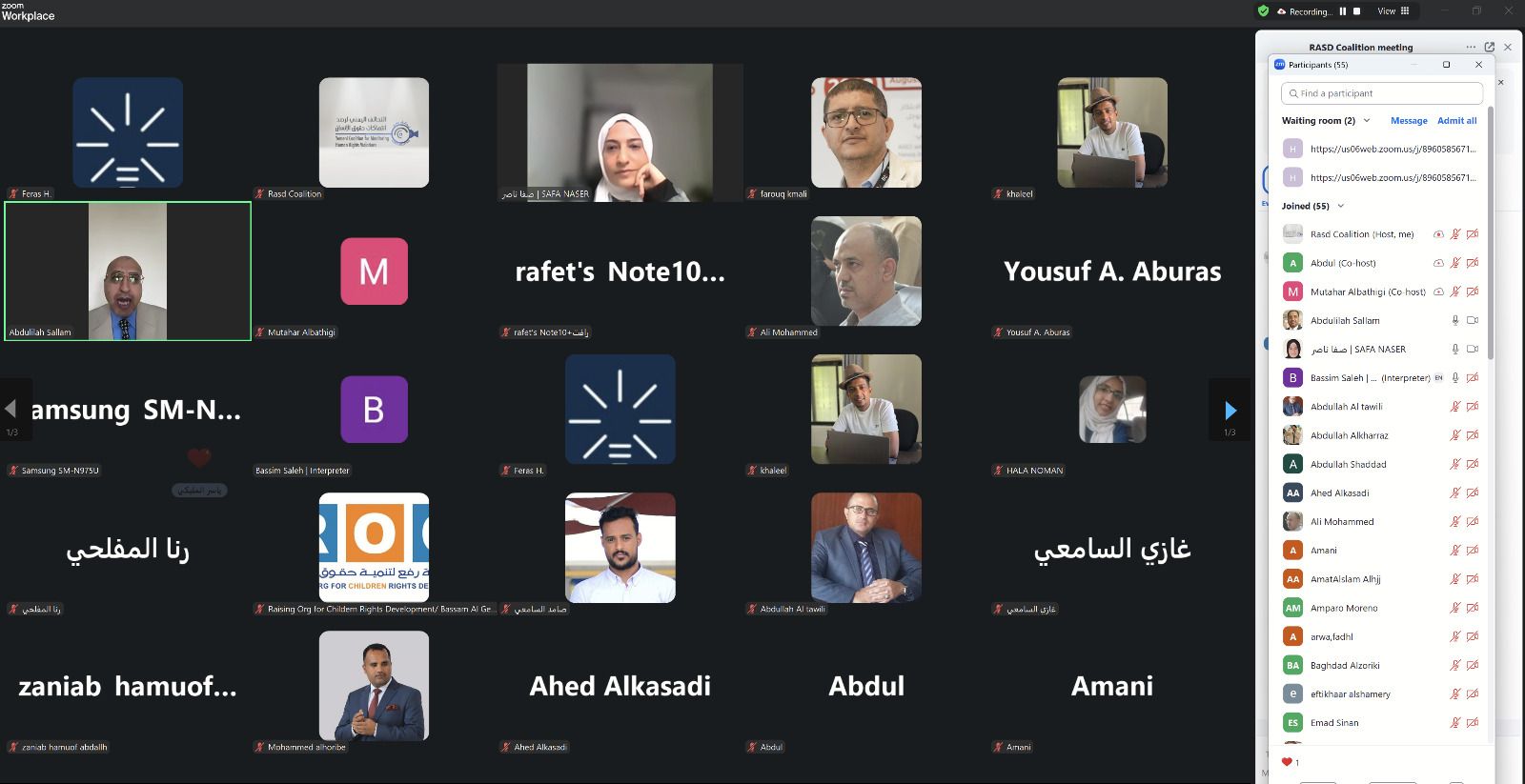
The study, supported by DT Institute and produced under the SAFE-II (Supporting Awareness, Facilitating Enforcement of Children’s Rights in the Yemeni Conflict) Project, was unveiled during a webinar bringing together journalists, rights defenders, and government representatives. Titled “Media Disinformation and Child Violations in Yemen: Between Evading Responsibility and the Victims’ Right to the Truth,” it is the first systematic research in Yemen to examine the relationship between children’s rights and media disinformation.
Opening the event, Mutaher al-Bathiji, Executive Director of Rasd Coalition, stated:
“Children in Yemen are not only victims of war but also of misleading warfare, where media disinformation demonizes those seeking truth and justice. Combating disinformation is a human rights issue, as the right to truth lies at the core of human rights.”
Safaa Nasser, the study’s author, highlighted the structural role of media in the conflict:
“Media no longer functions merely as a messenger. It has become an actor in conflict management, narrative control, and public opinion shaping. Disinformation undermines monitoring and documentation, denies victims their right to truth and recognition, and obstructs transitional justice efforts.”
The study, conducted under the SAFE‑II Project, analyzed 18 verified investigations and included 62 journalists and researchers. It found that all conflict parties engage in disinformation, with Houthis responsible for 90% of violations documented, including child recruitment, attacks on schools, and sexual violence. Disinformation distorts narratives, smears victims, and hinders accountability.
Feras Hamdouni, Yemen Program Manager at DT Institute, framed disinformation as an extension of violations:
“A violation does not end when it occurs. Disinformation transforms crimes into politicized stories, stripping them of their human rights dimension. Survivors are pressured into silence or coerced into repeating false narratives, deepening psychological harm and reinforcing impunity.”
The study documented six schools in Taiz used for military purposes, alongside systematic denial and narrative manipulation, creating a fogged environment that makes legal accountability extremely difficult.
Farouq Al-Kamali, editor-in-chief of YoubYoub, explained:
“Disinformation is a weapon to defeat opponents, steer public agendas, and conceal crimes. Fabricated clips, smear campaigns, and online trolling manipulate public perception and propagate hate.”
Khalil Kamel, Director of Marsadak, added that disinformation obstructs education, humanitarian aid, and legal accountability, citing intimidation of activists and families, including cases like Abdulmajid Sabra.
Recommendations
The webinar concluded with measures to counter disinformation and protect children’s rights:
- Establish an independent national mechanism to monitor disinformation.
- Strengthen media oversight and investigative journalism.
- Engage civil society to expose false narratives.
- Educate communities on children’s rights and reporting mechanisms.
- Promote transparency in documenting violations.
Speakers stressed that addressing disinformation is essential for breaking cycles of impunity and advancing transitional justice.
Mutaher al-Bathiji concluded:
“Protecting children requires free operations for rights organizations, accountability for perpetrators, and zero tolerance for disinformation.”