Yemen’s Complex and Transformative Political Terrain
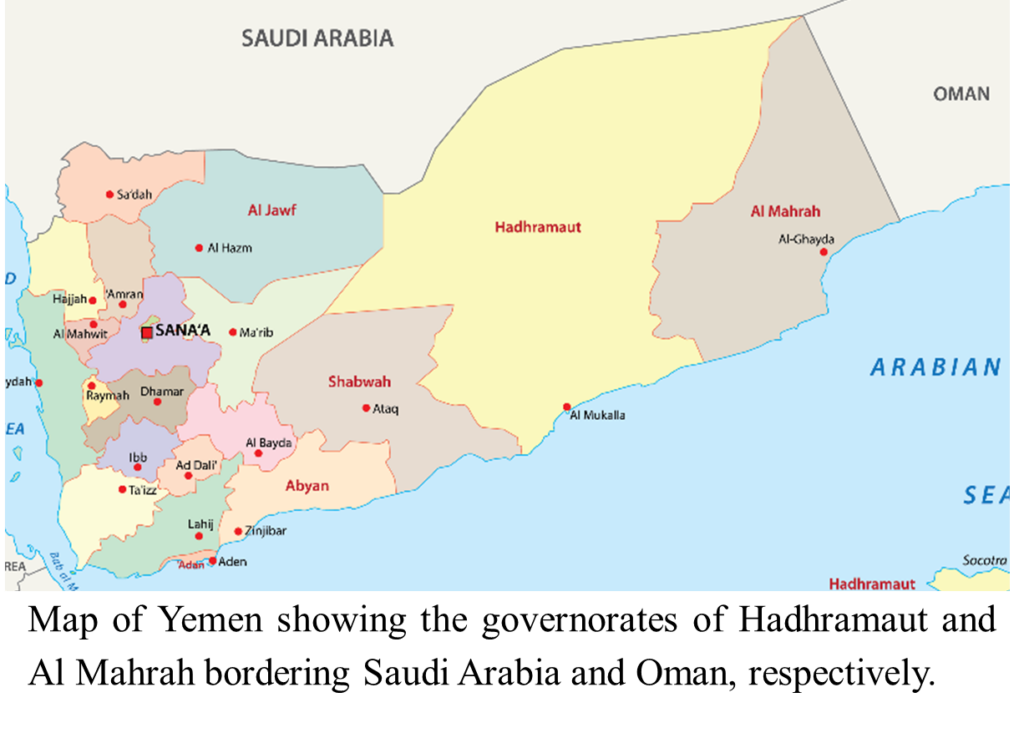
In December 2025, the Yemen political landscape shifted dramatically when the Southern Transitional Council (STC), backed by the United Arab Emirates (UAE), swiftly captured two large governorates under control of the Saudi-backed internationally recognized government of Yemen (IRG) in an attempt to force southern secession. The two governorates, Hadhramaut and Al Mahrah, compromise nearly the entire eastern half of Yemen’s territory and border both Saudi Arabia and Oman, respectively.
These moves brought tensions between Saudi Arabia and the UAE – already exasperated by the war in Sudan – to the forefront. Saudi Arabia sees the recent developments as a threat to its border security and may be concerned over the UAE’s intentions. Among experts and political commentators, the moves have triggered fears of deepened fragmentation within the anti-Houthi bloc, increased instability, renewed confrontations, and widened Houthi (Ansar Allah) influence.
After a quick military confrontation, Saudi-backed forces were able to restore their control over the governorates. Nevertheless, Yemen’s political structure remains forever changed after, due to the confrontations, which resulted in the disbandment of the STC and full withdrawal of UAE forces from Yemen. The STC’s dissolution came from orders from their leadership, while the UAE’s withdrawal from the Saudi-led coalition was requested by the IRG.
The Impact of STC Actions and Dissolution on Polarization and Governance
The STC’s recent moves in southern Yemen have exacerbated divisions among southern communities, creating tensions between pro-STC and anti-STC groups. This internal polarization may also strain relations between southern and northern communities, complicating efforts for national cohesion. If UAE–Saudi rivalry persists, competing external influence is likely to harden these divisions, entrenching polarization and undermining reconciliation efforts at both the southern and national levels.
Such political and social polarization may directly affect justice and accountability mechanisms in Yemen as fragmented communities express conflicting views on investigations, reconciliation, and transitional justice priorities. Victims and survivors may also face delays or barriers in accessing remedies due to divided loyalties or local resistance.
Polarization may also impact the functionality of government employees, particularly in regions where loyalties are split. Public service institutions may become politicized or administratively resistant when tasked with implementing policies perceived as favoring a particular faction. Such resistance can delay service delivery, erode institutional capacity, and undermine the enforcement of justice initiatives, ultimately fueling public anger and increasing pressure to reshape existing power dynamics.
These dynamics highlight the importance of inclusive, neutral, and survivor-centered approaches in transitional justice programming, as well as the need to carefully navigate local and regional loyalties to ensure accountability and the rule of law.
💬 “If we ignore [the concerns of community members and victims] as we did in the past and solve [tensions] in a way that is not suitable, we will have a new kind of conflict, and we will not have fostered trust between citizens and the State. … The community should be part of the solution. It should not come from external stakeholders, because the community will reject it.” – Hassan ibn Ubayd Allah, Director of the Field Studies Unit, the Madad Center, at the SPARK webinar, South-South Dialogue in Riyadh: Justice, Rights, and Pathways for Sustainable Peace.
Justice for Victims Amid Yemen’s Shifting Political Landscape
Going into 2026, these developments have led to restructuring of political dynamics as Saudi Arabia and Yemen’s Presidential Leadership Council (PLC) consolidate control. The PLC replaced two pro-secession council members affiliated with the STC with new members. Chairman of the PLC, Rashad al-Alimi also ordered the closure of all illegal prisons and detention centers, operating in former STC-controlled and other areas in southern Yemen. These include Aden, Lahj, and Dhaleh.
Closing detention facilities alone is not enough to protect victims’ rights or prevent impunity, as demonstrated by the case of Kamel and his son, Abdullah Taleb. This case, documented by the Justice4Yemen Pact (J4YP) Coalition, starkly illustrates this systemic abuse. Arbitrarily detained in July 2022 in Shibam, Hadramout, Kamel and Abdullah disappeared for nearly two years. After over a year and a half of searching, the family was informed they had died shortly after they were detained in a UAE-controlled detention facility, with their bodies showing severe signs of mistreatment.
Investigations by credible media and human rights organizations reveal widespread abuse in secret detention sites, including torture, sexual assault, and inhumane conditions, confirming patterns of arbitrary detention and extrajudicial killings. These violations demonstrate the urgent need for accountability and reparations, highlighting that justice for forcibly disappeared individuals is not optional but central to achieving genuine peace and must be a cornerstone of Yemen’s transitional justice process.
💬 “We need to talk about a national mechanism for those forcibly disappeared, which should encompass their political, economic, social, cultural, and environmental rights. … We should ask the families what they want. When we answer this question, it is clear what mechanism we should select. The families want to know what happened to their family members and who was responsible for their disappearances. … It is either that we work as legal professionals or as politicians. If we are going to do the job of politicians, we are going to waste the rights of the people.” – Afraa al-Hariri, Lawyer and Community Director of Peace Track Initiative at the SPARK webinar, South-South Dialogue in Riyadh: Justice, Rights, and Pathways for Sustainable Peace.
Experts and political commentators, continue to highlight a need for “the right players” – i.e., victims, survivors, community members, civil society, and non-governmental organizations – to be involved in any and all moves and discussions toward peace. One of the recurring challenges in Yemen’s peace process has been the sidelining of victims’ rights and accountability in political agreements.
As one participant in SPARK’s webinar, entitled South-South Dialogue in Riyadh: Justice, Rights, and Pathways to Sustainable Peace, observed. “The Riyadh Agreement (2019) is frequently cited as a case in which political settlement was prioritized over accountability. This approach left victims of armed clashes and human rights violations without redress and contributed to a broader erosion of trust in state institutions.”
Critical opportunities for targeted advocacy and for potential involvement of civil society and other key players have also increased amongst Saudi Arabia’s recent invitation to all southern components for a comprehensive dialogue on southern Yemen. The dialogue, which will take place in Riyadh and aims to resolve the secessionist issue, ahead of prospects for a national dialogue.
However, recent shifts in Yemen’s power dynamics, including the dissolution of the STC and its military component, as well as the exposure of serious violations committed under their control, cannot proceed without accountability. The dialogue initiative announced by Riyadh represents a critical opportunity to replace armed confrontation with negotiation. Yet, any reconciliation process that excludes victims and fails to address past abuses is unlikely to be sustainable, as genuine peace requires both justice and recognition for those affected.
💬”[Yemen] has been subjected to different cycles of crisis, which have produced a kind of legal system that is imposed only on the weak, while those with power are usually immune from punishment. They can get immunity, because they hold high positions. We need to have a very consistent, reliable relationship between the citizens and the state. … let’s think together and think aloud regarding how to have justice, equality, and rights at the core of the dialogue.” – Maha Awad, human rights activist and President, the Wogood Foundation for Human Security, at the SPARK webinar, South-South Dialogue in Riyadh: Justice, Rights, and Pathways for Sustainable Peace.
South-South Dialogue in Riyadh: Justice, Rights, and Pathways to Sustainable Peace
Amidst this fragile turning point, DT Institute’s Supporting Peace in Yemen through Accountability, Reconciliation, and Knowledge-Sharing (SPARK) program continues its mission to promote inclusive, survivor-led, and sustainable transitional justice to Yemen’s peacebuilding process. The webinar entitled, South-South Dialogue in Riyadh: Justice, Rights, and Pathways to Sustainable Peace conducted under the DT Institute’s SPARK program in partnership with SAM for Rights and Liberties (SAM) and the Abductees’ Mothers Association (AMA), both members of the J4YP Coalition, was recognized as a timely initiative to refocus the conversation on victim-centered approaches ahead of the upcoming southern negotiations.
This webinar brought together over 40 peacebuilding stakeholders, including civil society organizations, human rights activists, and legal professionals to discuss a transitional justice approach towards peace in Yemen via justice, accountability, and rights-based pathways towards political settlement.
The webinar strongly emphasized the urgent need for a national mechanism to address unresolved cases of enforced disappearances, noting that perpetrators include multiple conflict and political actors. Speakers called for this mechanism to be inclusive of lawyers, civil society organizations, and families of the disappeared, ensuring both accountability and victim-centered approaches. Participants highlighted the critical role of local civil society organizations in monitoring cases and advocating for justice.
The Abductees’ Mothers Association (AMA) drew attention to the struggles of families in Aden, who are uncertain where to seek justice due to the ongoing reorganization of military and security authorities. AMA stressed that alongside the closure of illegal detention facilities, it is essential to establish a legal, independent framework, potentially through an international or separate commission, to investigate the fate of the forcibly disappeared. The webinar consistently framed these interventions as a call to action, urging that justice for victims must not be sidelined and must remain central in both ongoing and upcoming political negotiations.
The webinar also highlighted a transitional justice module addressing the reintegration of dismissed employees, illustrating the effectiveness of structured mechanisms in mitigating the underlying grievances in southern Yemen. Speakers underscored the detrimental impact of delayed redress, noting that the committee only became operational in 2023 to address violations committed in 1994 — a delay that had been exploited to exacerbate instability.
Participants emphasized that the Riyadh dialogue should replicate this successful approach to address cases of enforced disappearance and arbitrary detention, reinforcing the necessity of timely, victim-centered transitional justice interventions as a cornerstone for sustainable peace.
💬 “When we talk about transitional justice it should not be part of the political process, because it will lead to failure. We need to balance between the rights of victims and stability of society. … We cannot be silent about what happened. Otherwise, things will happen again in the future and people will try to take matters into their own hands. There should be gradual change that leads to sustainable stability. The community should be part of the solution. … We need to open the files of the past, but with wisdom.” – Hassan ibn Ubayd Allah, Director of the Field Studies Unit, the Madad Center, at the SPARK webinar, South-South Dialogue in Riyadh: Justice, Rights, and Pathways for Sustainable Peace.
SPARK’s Work Equipping Civil Society Organizations, Local Activists, and Community Members
Throughout the webinar, the common theme shared among the speakers emphasized the importance of victims, survivors, community members, civil society, and non-governmental organizations coming together with governmental institutions to deliver effective transitional justice-based solutions.
Promotion of inclusive, survivor-led, and sustainable transitional justice is the aim of DT Institute, and local J4YP Coalition members, AMA, and SAM under the SPARK program. The program includes objectives focused on strengthening the capacities of Yemeni civil society and community members to enable them to participate and lead inclusive peacebuilding endeavors built off the principles of transitional justice.
Within this framework, SPARK has trained over 150 civil society workers, activists, and representatives on transitional justice principles in preparation for national peacebuilding. The program also engaged over 230 civil society actors within the Transitional Justice Ambassadors Forum (TJAF), a cohesive, coworking space for collaboration and knowledge-sharing on peacebuilding endeavors.
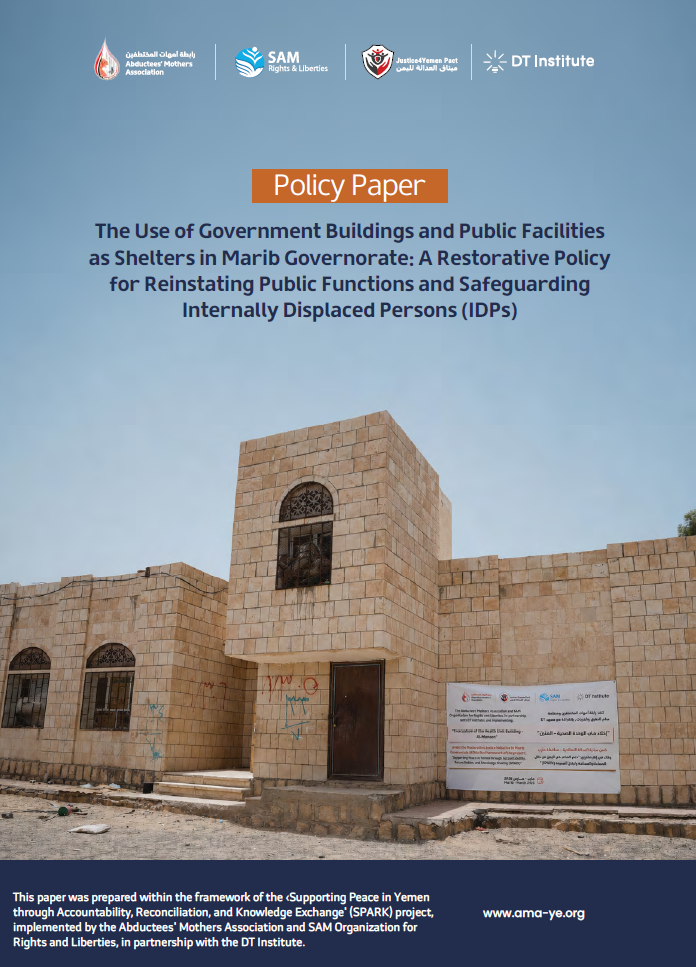
Under SPARK, these projects have included restorative justice pilots, community-driven reconciliation pilots resolving pervasive issues contributing to societal unrest throughout Yemen. Thus far, partners have finalized four pilots, bringing together over 19,000 locals representing diverse segments of Yemeni society, including community members, religious influencers, authorities and security affiliates, government institutions, civil society organizations, and influencers.
Such initiatives demonstrate reconciliation at the community level, operationalizing transitional justice principles to address unique and complex issues by leveraging the participation of local community members and diverse stakeholders.
💬 “Transitional justice should build trust, and [focus on] how we can develop our future. The community can help and participate in shaping transitional justice. CSOs, syndicates, and research study centers should be part of it [as well]. All [involved] should have confidence in a channel that can reflect their own ideas of transitional justice. Also, the State and victims should be part of the solution as well.” – Hassan ibn Ubayd Allah, Director of the Field Studies Unit, the Madad Center at the SPARK webinar, South-South Dialogue in Riyadh: Justice, Rights, and Pathways for Sustainable Peace.
Feras Hamdouni, Senior Program Manager at DT Institute, emphasized this moment as critical for transitional justice, presenting key openings for sustainable interventions that recreate local level SPARK restorative justice models onto the national stage. “While polarization remains entrenched within the South and across the North–South divide, the current political reset creates a rare opportunity to move from factional control toward more inclusive and accountable governance.”
Hamdouni continued: “For transitional justice, this phase is decisive: without anchoring political arrangements in accountability, victim-centered approaches, and credible mechanisms to address past violations, existing grievances risk being recycled into future conflict. The upcoming Riyadh Dialogue is therefore not merely a political exercise, but a critical entry point to align representation, institutional reform, and justice processes, laying the groundwork for durable stability, social cohesion, and a realistic pathway toward peace in Yemen.”