1. Overview of the SPARK Program
Under the SPARK (Supporting Peace in Yemen through Accountability, Reconciliation, and Knowledge-Sharing) program, DT Institute and its local partners, the Abductees’ Mothers Association (AMA) and SAM for Rights and Liberties (“SAM”), launched raising awareness campaigns to complement restorative justice pilots and engage community members in Taiz and Aden.
The restorative justice pilots aim to foster reconciliation and resolve community-level public disputes that have caused human rights violations. While raising awareness campaigns educate community members on transitional justice mechanisms and engage experts and decision makers in thought provoking and effective dialogues and initiatives to advance Yemeni transitional justice.
This model was designed in response to the findings of The Path Towards Peace, a research study published by SPARK in April 2025. This study captured local understandings of transitional justice across Yemen, revealing that 64.3 percent of community members prioritize reconciliation and war-ending efforts over retributive accountability. Moreover, 79 percent of community member respondents reported that either they or a family member had been subjected to a human rights violation in Yemen. Among the violations, forced displacement was the most common, reported by approximately half of these respondents.
💬 “We are tired of displacement and homelessness, we want to go home, after we go home and settle down in our house then every perpetrator can be held to account.” – A woman from Taiz, as quoted inThe Path Towards Peace study.
Within the study, 79 percent of participants pointed to public reform, which includes restoration of public services, when asked about transitional justice pillars for prioritization in Yemen. In addressing these gaps, SPARK works to advance local and national reconciliation, by furthering initiatives to educate local stakeholders on transitional justice concepts. At the same time, the program builds resilience within divided communities through the pilots, which create sustainable pathways for dialogue and conflict resolution.
Through effective engagement, the program activates all segments of society – from the community level to civil society, experts, and high-level governmental stakeholders. This enables these groups to not only be participants, but central drivers of Yemen’s transitional justice journey. With donor support, these efforts can be scaled to reach more communities, ensuring that reconciliation and peace take root from the ground up.
2. Essential Public Buildings Forced to Neglect Host Community Members to Serve IDPs
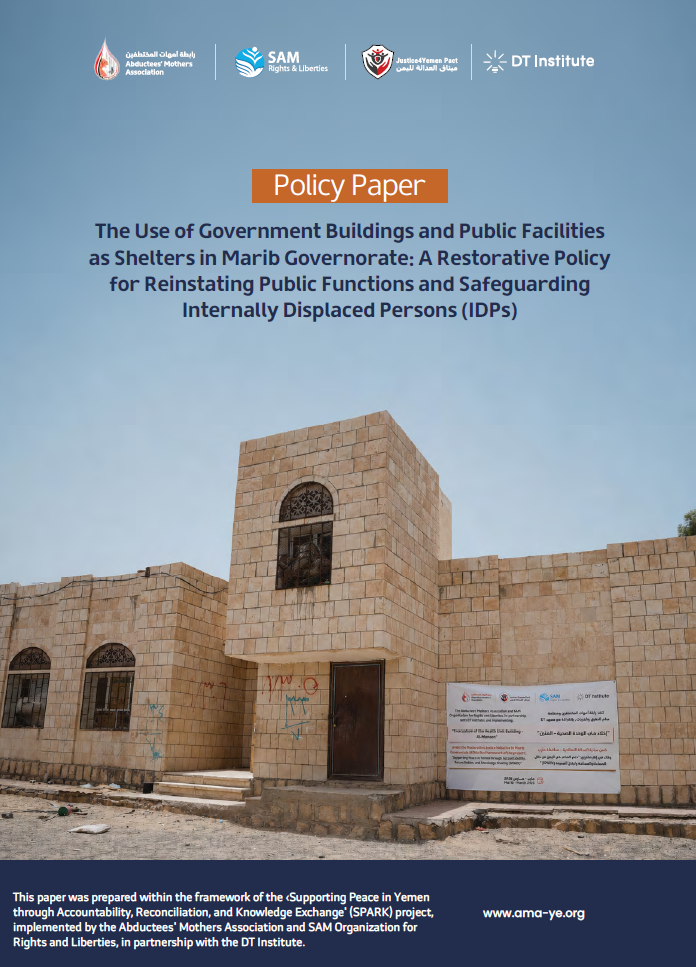
The Health Unit, located in the Al-Maneen area in Marib, was used as a shelter by internally displaced persons (IDPs) for over 10 years. These IDPs included families with young children, elderly individuals, and many marginalized populations. They did not settle in this public building by choice. Rather, the conflict forced them to leave their homes and seek safe shelter elsewhere. Their displacement, a direct result of the war, is a major harm and human rights violation. It impacts their ability to live with privacy and dignity, to provide for their families, and their children’s abilities to access education.
💬 “I am convinced…of the importance of evacuating [all those who live in government facilities] in order to activate [public service operations] and provide the services for which they were established. But the difficult circumstances that the residents of these government facilities live in prevent us from acknowledging this fact…The state does not have the necessary capabilities to provide assistance…these facilities need [intervention] by contributing to providing assistance to the residents of these facilities after verifying their status, and also intervening in the activation of these facilities so that one person is not removed and replaced by another. ” – Displaced IDP, who participated in the Marib Restorative Justice Pilot.
The IDPs themselves are not the only people affected. Prior to its use as a shelter, the Health Unit provided essential medical services to approximately 20,000 civilians, including displaced and host communities. However, because of its ongoing use in housing those displaced, the Health Unit was forced to suspend its services. As a result, for over 10 years, the Health Unit was unable to provide urgent, life-saving services to one of the most underserved displacement areas in the governorate.
The Unit’s closure has led to several preventable deaths over the years. These include cases of children dying from curable diseases, such as measles, and pregnant women passing away during childbirth due to the lack of alternative urgent care available. Instead, these women were forced to undergo home deliveries, endangering the lives of both mother and child.
The Al-Maneen area possesses no other hospital or emergency medical center capable of providing the population of over 20,000 with the urgent medical care it requires. As a result, patients are forced to travel long distances to the nearest functioning health facility. According to local residents, the health situation was “virtually nonexistent,” forcing residents to rely on themselves to transport the sick and provide first aid with whatever they had available. Furthermore, they are often required to sit through lengthy wait times for minor but significant medical interventions that the Health Unit would be able to provide in a much shorter time frame. These include therapeutic injections, among other treatments.
A representative from the Health Unit underscored the urgent need for restoration of their services by illustrating the real-time effects of the Health Unit’s occupation on the local population during a dialogue session, held by SPARK partners under the Marib Restorative Justice Pilot. He emphasized the deaths of three children due to the center’s inability to provide them with life-saving services. Host community members echoed his call and urgency, expressing a high demand for restoration of the Health Unit and its services.
💬 “A resident of the area told Yemen Monitor that the health situation was ‘almost non-existent,’ explaining that the lack of services led to tragic results, as five children died from measles, and two women lost their lives during childbirth due to the inability to provide them with timely medical assistance. …[T]he residents were forced to rely on themselves, especially during the month of Ramadan, to transport patients and provide first aid with whatever they had available, ‘even in the early hours of dawn, in the absence of any organized medical support.’” – Abduallh al-Attar within his article published by Yemen Monitor.
Another significant negative effect of the Unit’s shutdown was animosity, societal unrest, and distaste, which developed between host community members and those displaced. Instead of looking upon those displaced and recognizing their pressing needs and right to live in dignity, host communities blamed IDPs for their lack of essential medical care. This heightened tensions throughout the Al-Maneen area, contributing to general community unrest and distrust. This also weakened trust in public institutions, adding to the long-term social harms of the IDPs’ displacement and use of public buildings as shelters.
Heightening these feelings of ill-will is the fact that IDP families were not only sheltering in the Health Unit, but also in other essential public buildings. Their use of these buildings as shelters similarly impacted the ability and operations of these public centers, keeping them from serving their populations.
Public buildings providing shelter to IDPs included the Rural Women’s Community Building, which provides agricultural and health services to approximately 30,000 rural women. IDPs were and still are also sheltering in a Saba University building. Saba University serves over 19,300 students in Marib, approximately 36 percent of which are women. The negative impact on education services resulting from the IDPs sheltering within the building impacts local and displaced students. It amplifies financial burdens, physical hardships, and safety risks associated with long-distance travel to alternative higher education institutions.
💬 “The restoration of the Sheba Regional University building contributes to enhancing the educational and academic process and providing a suitable environment for students and faculty members, which reflects positively on human development in the region. The restoration of the Women’s Development Building also makes it possible to reactivate programmes and activities aimed at supporting women and rehabilitating them economically and socially, and expanding the scope of services targeting women and girls in society. Whereas there are many families headed by widows, divorcees or girls, and these groups are in dire need of such programs and activities…” – Local authority representative involved in the Marib Restorative Justice Pilot.
Because of these grave impacts on longer-term community cohesivity, a transitional justice-centered solution was required to address the social harm caused by conflict-related violations, including forced displacement, community tensions, and weakened trust in public institutions. Such a solution includes facilitated dialogue and mediation featuring voluntary agreements and multi-stakeholder collaboration implementing practical remedies for affected populations. This empowers local populations by giving them a say within the process. It also strengthens community relations, trust in public institutions and between opposing groups by enabling these groups to work together towards a solution.
3. Initiative Spotlight: The Marib Restorative Justice Pilot
Under SPARK’s Marib Restorative Justice Pilot, SPARK partners, SAM and AMA launched a multilateral response initiative to restore public services by relocating the IDPs currently using these buildings for shelter. The initiative utilizes a participatory approach to acknowledge and address the complex interplay of humanitarian, legal, and social concerns tangled up within the tasks of relocation and restoration. Furthermore, it seeks to strike a balance between the rights of IDPs and the overarching public interest maintained by the local government in serving its people.
The initiative aims to promote community reconciliation and restorative justice in Marib by addressing the harm caused by IDPs’ displacement and their use of the public buildings as shelters. It seeks to rebuild trust between the IDPs, host communities, and local authorities tasked with maintaining public buildings and serving their populations.
In addition to restoring services, the pilot seeks to address the long-term social harm caused by conflict-related violations, including forced displacement, community tensions, and weakened trust in public institutions. By facilitating dialogue, voluntary agreements, and practical remedies for affected populations, the pilots operationalize key transitional justice principles of reconciliation, redress, and institutional restoration.
To safeguard IDP’s legal and human rights, as well as their dignity, SPARK partners also recruited a legal consultant. Throughout the initiative, the legal consultant provided necessary legal advice to the project’s administrative body by conducting risk assessments and interpreting applicable laws and regulations. Moreover, the legal consultant attended multilateral stakeholder meetings to ensure that legal tasks are undertaken and ensure that IDPs’ rights are adequately represented and considered. The consultant also conducted field visits to local authorities’ offices and public buildings to ensure that legal processes and permits are respected.
This approach works to ensure the fundamental human rights of all those involved, including the right to security of person for IDPs and the right to a standard of living adequate for health and well-being (which includes medical care and necessary social services) for all those involved. Both of these rights are promulgated within the Universal Declaration of Human Rights (UDHR), which sets out a common standard of achievement for all peoples and all nations.
💬 “[This pilot requires] commitment to the principle of human dignity and respect for the rights of all displaced families…engag[ment] of IDPs and community committees in dialogue and listen[ing] to their needs and concerns…coordinating with the competent authorities and humanitarian organizations to find appropriate alternatives and solutions as much as possible…” – Olfat Rifai, Member of the Community Committee created by SPARK partners under the Marib Restorative Justice Pilot.
4. Agreement and Impact
After over two months of consistent work, the Marib Restorative Justice Pilot has successfully restored the Health Unit in Al-Maneen. Starting in early February, a community committee consisting of five influential locals was formed to oversee implementation and actualize the goals of this initiative. The committee immediately took control by initiating detailed documentation efforts, including field visits and discussions with government officials, residents, and IDPs throughout the area.
In under one month, such documentation has revealed the presence of approximately 1,141 displaced families, which have taken shelter in eight public buildings. These buildings included the Safer Gas Company, a university dormitory, the Youth and Sports House, a local community college, a local council, a museum, a Saba University building, and – of course – the Health Unit of Al-Maneen Area. The Health Unit was sheltering four IDP families, whose displacement had significantly disrupted medical services.
Among those identified, the Health Unit was selected as a priority building due to its essential functions. Thus, AMA quickly organized a series of dialogue sessions and coordination workshops with key stakeholders to negotiate relocation and restoration of Health Unit functions. The diverse stakeholders included representatives from the Health Unit, the Executive Unit for IDPs, the SPARK-formed community committee, the local authority, and international non-governmental organizations (NGOs), who are part of the Shelter Cluster. Local authority representatives included those from the Director General of the Office of Planning and International Cooperation, the Director General of the Public Health and Population Office, and a representative of the Director General of the Social Affairs and Labor Office.
To enable dignified, sustainable, and effective relocation, the pilot adopted a strategic approach based on mediation efforts and direct dialogue with IDPs. Through direct dialogue, SPARK partners addressed the expressed concerns of IDPs. Moreover, the legal expert raised their understanding and awareness of their legal rights. Under the initiative, SPARK partners also coordinated efforts between government actors and civil society to provide essential services and support to IDPs. This approach proved highly effective, balanced, and contrasted local authorities’ previous failures to relocate IDPs without such considerations addressed.
Additionally, to facilitate a smooth transition of families, SPARK partners also conducted field visits to IDP families. The visits served to build trust, strengthen mutual understanding, and raise awareness of the importance of the facility, while clearly explaining the objectives and scope of the initiative. Within the visits, partners assessed the needs and concerns of IDP families. The visits allowed them to support a dignified relocation process and directly address families’ concerns, ensuring their consent to relocate. Partners practiced Do No Harm principles, ensuring respect of IDPs’ informed consent and rights.
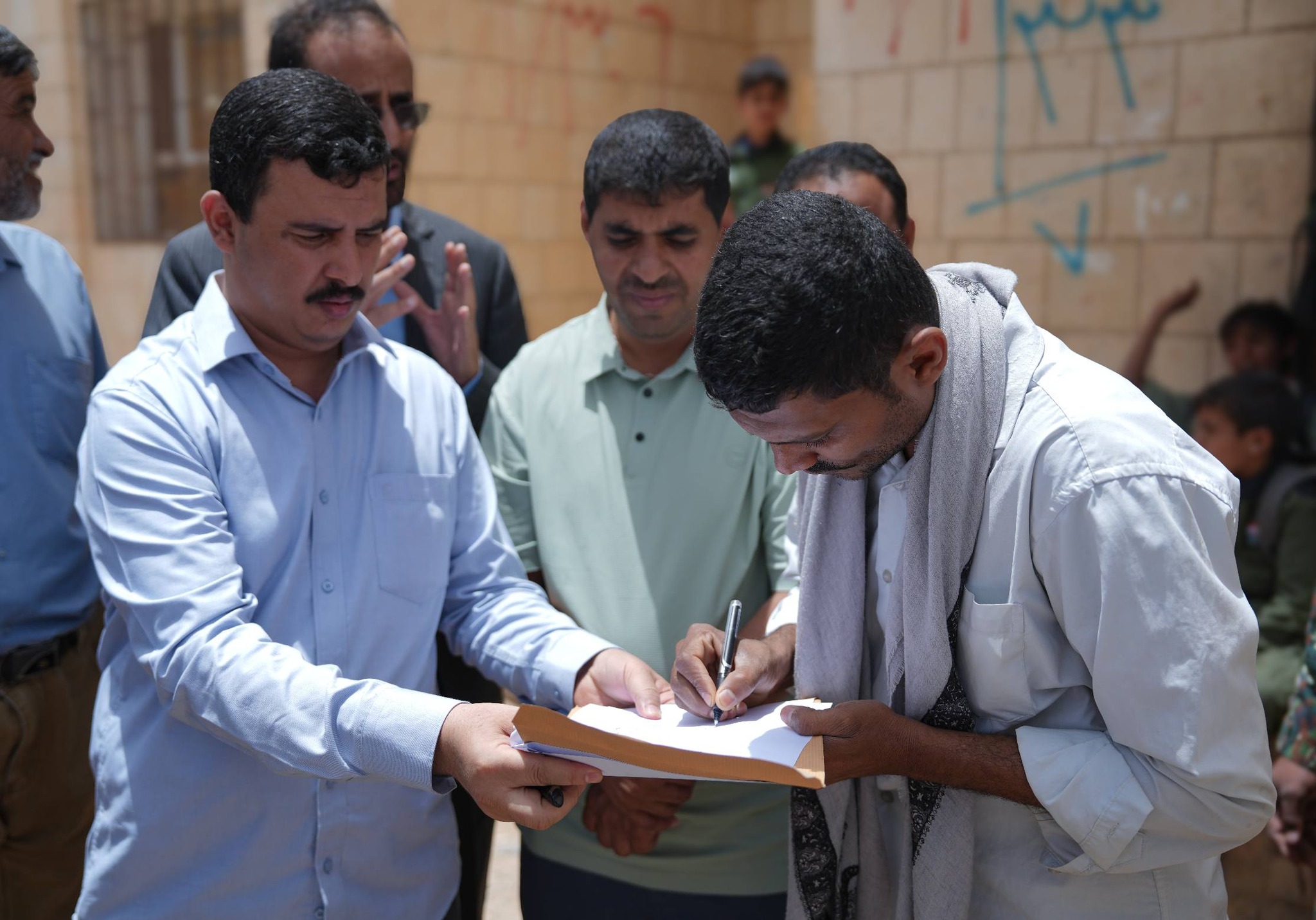
Through this process, SPARK partners facilitated new homes for IDP families. The housing units were surveyed by the legal expert, who verified their compliance with legal criteria. The IDP families also gave her free and voluntary consent to relocate into the housing units by signing relocation agreements prepared by the legal expert. SPARK partners also divided responsibilities amongst the Shelter Cluster to ensure close monitoring of the relocation process, support to the IDPs, and to facilitate the provision of humanitarian assistance until families were safely settled into the new housing units.
Restoration of the Health Unit is expected to result in a full return to services in June. The restoration successfully gained significant media attention, highlighting the importance of this step in a context where local authorities had been attempting for more than three years to restore the health unit without success. The Health Unit building restoration event was covered by more than 25 media outlets, including Yemen Monitor and Al Thawri.
💬 “[T]he center’s operation will provide vital services to the population, including general emergencies, obstetric emergencies, general medicine, and ambulance services, stressing that this ‘will represent a real glimmer of hope’ in light of the spread of diseases and high mortality rates.” – as shared by Khaled Al-Tam, member of the SPARK-created Community Committee, in an article by Yemen Monitor.
4. Learning, Documentation, and Replication
Restoration of the Health Unit has also helped rebuild trust between communities and authorities by strengthening the link to transitional justice principles of institutional trust-building and guarantees of non-recurrence. This has reduced the likelihood of future disputes and enabled further cooperation between diverse community segments to reach similar solutions addressing other public buildings in which IDPs have taken shelter.
Accordingly, SPARK partners continue with the pilot by working to address occupation of the Rural Women’s Community Building by two IDP families. This process follows a similar structure to the Health Unit, utilizing transitional justice principles utilizing open dialogue, incorporating diverse stakeholders and championing victim-centered justice and leadership to achieve effective, sustainable solutions by the community for the community.
💬 “This kind of intervention demonstrates how transitional justice can move beyond abstract policy debates into practical, community-driven solutions that address the lived consequences of conflict, particularly forced displacement and the breakdown of public services. What we see in Yemen is not only a humanitarian challenge but a justice gap that requires repair of relationships, restoration of rights, and rebuilding of trust in public institutions.” – Feras Hamdouni, Program Director, DT Institute
The community committee initiated these efforts by coordinating with stakeholders in the IDP Executive Management Unit and the Shelter Cluster to provide the families with alternative housing solutions, ultimately landing on container housing units. They also coordinated with the Housing, Land, and Property (HLP) Unit to identify land for placement of container housing units. Direct, friendly discussions were also held with the IDP families who responded positively and expressed willingness to voluntarily vacate the building.
Following successful coordination, agreement from the families, and confirmation of available alternative shelter from the Cluster, a dialogue session was conducted bringing together all stakeholders to agree on the evacuation process and timeline. The dialogue gathered 15 participants, including the CC alongside the IDP Executive Management Unit, two organizations from Shelter Cluster including Agency for Technical Cooperation and Development (ACTED) and the Norwegian Refugee Council (NRC). Government representatives from the Security Department and Agriculture Office were also attendees, as well as the SPARK-recruited legal specialist and IDP representatives.
Participants emphasized the importance of dignified relocation for IDP families and the need to restore public services. The representative from the Agriculture Office confirmed the importance of the building for rural women. The building typically provided agricultural and health services to 30,000 rural women. The Agriculture Office’s representative also agreed to share an operational plan with the Norwegian Refugee Council to restore operations and services after IDP families were relocated.
Dialogue session participants also agreed on a timeline for signing a relocation agreement in early May and completing the transfer and restoration of the building by early June. They also agreed on a division of responsibilities: the IDP Executive Management Unit and Shelter Cluster will provide alternative shelter, including two confirmed container housing units, and cash assistance; the community committee will support the dignified relocation of IDP families; and local authorities will work on restoring the building’s operations and coordinate with donors as needed.
Simultaneously, SPARK partners have also been working to address occupation of the Saba University building by four IDP families, which hindered infrastructure expansion efforts at the university. The university represents a strategic pillar and a major higher education institution in Yemen, currently serving more than 19,300 students, of whom approximately 36 percent are female. Its significance lies in its role as a vital educational lifeline, enabling thousands of both local and displaced students from different governorates to continue their university studies.
Thus far, the community committee has conducted five field visits to listen to the IDP families and discuss options for dignified relocation. Coordination was carried out with the university administration, the IDP Executive Management Unit, and the Shelter Cluster to identify suitable alternative shelter solutions. Coordination is currently ongoing to secure alternative housing. An initial agreement was reached with the IDP families to vacate the university building once appropriate alternatives are provided.
💬 “[In working with IDPs, we must e]nsure that IDPs have a clear and transparent access to information about procedures and options available to them…[and] apply the principles of safeguarding, non-discrimination, and not causing harm at all stages of the initiative.” – Olfat Rifai, Member of the Community Committee created by SPARK partners under the Marib Restorative Justice Pilot.
5. Scaling the Impact
Building on the positive outcomes achieved in Marib, the initiative demonstrates a viable model for resolving displacement-related challenges through structured dialogue, mediation, and community-led approaches. The intervention has contributed to the restoration of one public building and the provision of dignified relocation solutions for displaced families, reinforcing the effectiveness of non-coercive, consensus-based processes supported by civil society engagement.
“The pilot succeeded because it addressed every segment of stakeholders – IDPs, host communities, local authorities, and civil society – they were all consulted and brought together,” explained Lynn Arbid, DT Institute Program Officer. “The pilot utilized a structured and organized framework that respected the rights of the most vulnerable – the IDPs – while ensuring and restoring services for the public good. It leveraged the capabilities of each segment to foster smooth collaboration and an effective transition, utilizing civil society and local governance to provide IDPs with needed facilities and support.”
The model has also highlighted the value of coordinated action between humanitarian and human rights actors in facilitating sustainable and dignified solutions to complex displacement cases. Through this approach, community participation has been strengthened, dialogue between affected families, including IDPs and host communities, and local authorities has been improved, and legal facilitation has supported the formalization of agreements.
“Compared to contexts like Syria during its transitional period, where locally driven reconciliation and community-based recovery initiatives have also played an important role in supporting social cohesion, restoring basic services, and facilitating return and stabilization in some areas despite the fragmented governance landscape, Yemen shows that locally rooted restorative justice approaches can still create space for negotiated solutions before tensions fully harden into long-term structural divisions,” stated Feras Hamdouni, Program Director at DT Institute. “This makes such pilots essential for shaping how transitional justice is operationalized in real post-conflict environments.”
Locally led restorative justice processes can contribute to transitional justice objectives in practice. By addressing the consequences of conflict-induced displacement, restoring access to essential public services, and rebuilding trust between affected communities and public authorities, the initiative represents a form of collective redress and institutional recovery for harms experienced during the conflict.
Given the continued scale of need, with over 1,000 families still residing in or around seven public buildings in Marib, there is a clear opportunity for expansion and replication. Similar challenges are also present in other conflict-affected areas under the IRG, particularly in Taiz, where public buildings continue to be used as IDP shelters and essential services are disrupted. Such initiatives would be the first step in tackling Yemen’s severe internal displacement issue and providing IDPs with effective reparations.