1. The Need for Transitional Justice in Yemen
Transitional justice aims to address and reform countries with long histories of human rights violations and conflict, utilizing a victim- and community-centered approach. In doing so, transitional justice champions truth-telling, memory-keeping, accountability, institutional reform, societal reconciliation, and reparations for victims.
As such, transitional justice is well-positioned to address Yemen’s long and bloody history of violent conflict. This history has been marred by a repetitive cycle in which periods of countrywide conflict are temporarily seized by attempts at political reconciliation that repeatedly prove unsustainable and fail, returning the country to bloody conflict. This vicious cycle and the greater conflict have left Yemen ravaged with widespread famine, mass displacement, and one of the largest humanitarian crises in the world. As all of Yemen struggles for survival, societal ties have dissolved and relations between the parties – and the people – continue to worsen.
To set Yemen on a new path, transitional justice must be embraced by political actors and Yemeni citizens alike. Transitional justice varies depending on the context in which it is incorporated. In Yemen, reconciliation – in addition to institutional reform, reparations, memory-keeping, and truth-seeking – is a necessary and critical component. It is necessary to end Yemen’s vicious cycle and to provide sustainable peace to the satisfaction of Yemeni society as a whole.
2. Overview of the SPARK Program
Under the SPARK (Supporting Peace in Yemen through Accountability, Reconciliation, and Knowledge-Sharing) program, DT Institute and its local partners, the Abductees’ Mothers Association (AMA) and SAM for Rights and Liberties (“SAM”), continue to work towards whole-of-society transitional justice in Yemen. In doing so, partners are tackling transitional justice from all sides, embracing all components of Yemeni society.
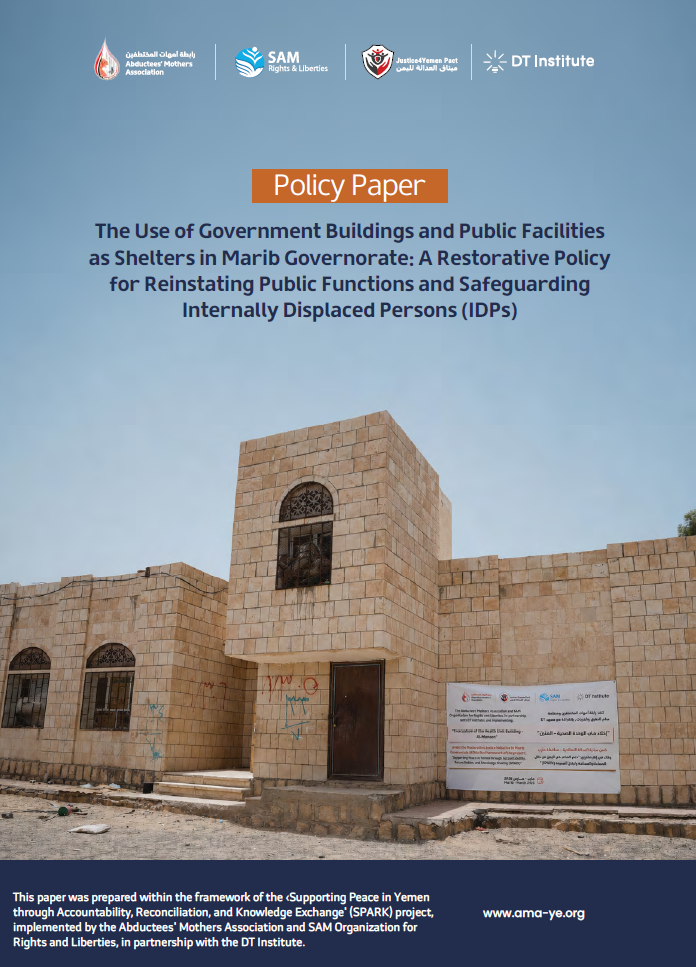
To address community disruption and discontent, SPARK partners have launched restorative justice initiatives. These initiatives empower communities to address issues impacting peace and causing public unrest through reconciliation, providing them with the tools to recreate the models and tactics used to resolve future conflicts. To ensure transitional justice is victim-led and community-oriented, SPARK partners are implementing raising awareness initiatives. These initiatives educate and enable community members and victims to be active changemakers in future transitional justice implementation.
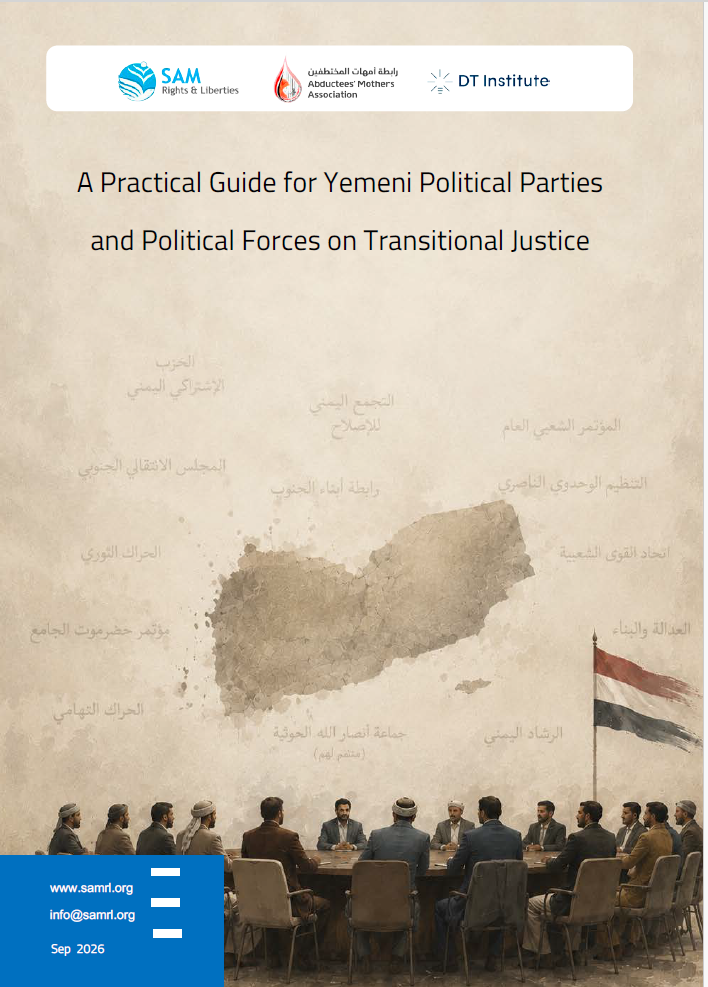
SPARK partners are also working to address influential actors throughout Yemen, including religious figures, political actors, and de-facto authorities. In engaging these actors, SPARK partners have launched initiatives to bring political components together to create a joint political narrative on transitional justice and to identify agreement and entry points for transitional justice processes between parties. In line with this, SPARK partners continue to leverage their local expertise and extensive experience to facilitate productive interactions between parties. This includes their contributions under the political narrative activity as well as their work on political detainees held by various political actors.
3. SPARK and YHRFL+ Work Supporting Detainees and Fostering Prisoner Exchanges
SPARK Partner AMA maintains over a decade of experience in addressing detainee files in Yemen. Under the Yemen Human Rights Forensic Lab Plus (YHRFL+) program, AMA and SAM, along with additional YHRFL+ partners, maintained an extensive database on detainees. YHRFL+ partners documented human rights violations throughout Yemen, including 100 violations of personal liberty and integrity, such as arbitrary detentions. AMA’s most recent annual report, Mothers at the Gates of Justice 5, includes additional detainee documentation data, including 833 cases of civilian arrest and abduction, 103 cases of enforced disappearance, 58 cases of detainee torture, and six deaths in prison due to medical neglect and torture.
Under YHRRL+ and the Justice4Yemen Pact (J4YP) Coalition, formed by YHRFL+ partners as well as additional local Yemeni civil society organizations, this data was used to advocate for the rights of the detained. Such advocacy included joint statements, investigative reports, and awareness raising activities. The joint statements drew attention to and covered key detention issues, such as the extensive use of torture, medical neglect, and the use of political trials against detainees.
Investigative reports, including Witness Memory by AMA and Years in Hell by SAM analyzed severe human rights violations committed upon detainees, providing details on arrest and detainment procedures and the victims of political detainments. Webinars, films, public hearing sessions, and other awareness raising activities. Webinars brought together experts to offer perspectives on critical topics, including political detentions, executions, and detainment of journalists. Additionally, in public hearing sessions and films former detainees shared their harrowing and traumatic experiences as political detainees. YHRFL+ activities garnered significant attention, generating further awareness via TV, news outlet, and social media coverage.
YHRFL+ partners engaged in direct advocacy interventions with key international stakeholders as well. SAM and AMA met with the Permanent Representative of the Sultanate of Oman to the UN Office in Geneva to address unjust detainment and political prisoners in Yemen. The representative requested detainee lists, which AMA and SAM provided, for utilization as part of the country’s ongoing diplomatic engagement and negotiation efforts aimed at securing the release of detainees. YHRFL+ partners submitted eight cases involving arbitrary detention and enforced disappearance to international justice and accountability mechanisms such as the Working Group on Arbitrary Detention, the United Nations (UN) Special Procedures Submission Mechanism, and several UN Special Rapporteurs.
Moreover, AMA has held numerous protests advocating for the release of detainees. AMA protests have garnered coverage from a multitude of media outlets and influential online personalities. In 2022, under the slogan, “Justice for Abductees” AMA held a protest advocating for 670 detainees, including 526 individuals held by the Houthi (Ansar Allah) group.
During the protest and through their advocacy work, AMA drew attention to the cases of four journalists held by the Houthis, who were taken by the Houthis in 2015. The journalists faced routine torture and politically motivated espionage charges. Accordingly, the Houthis sentenced all four of them to death. Subsequently, in April 2023, these four journalists were released by the Houthis in a prisoner exchange agreement between the Houthis and the IRG. These journalists were subsequently interviewed by YHRFL+ partner, the Studies and Economic Media Center (SEMC). Their testimonies were publicized in a moving film, capturing the true nature of political detentions in Yemen.
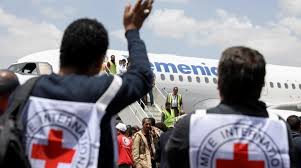
AMA has also played an integral role in fostering the implementation of past prisoner exchanges. In 2021, AMA supported a local prisoner exchange in Taiz between the Houthi group and the IRG. The exchange included 63 civilian abductees taken by the Houthis. At the request of mediators, AMA prepared and regularly updated lists of civilian abductees and maintained ongoing communication with the families.
AMA’s Taiz team traveled with the mediation committee through six districts and across the rugged Sama’a mountain range to receive those released under the locally mediated exchange agreement. Among dozens of men, six women from AMA participated in the mission. During the exchange, the team moved between released abductees and prisoners, witnessing emotional reunions, including that of a mother embracing her son after four years of detention. The exchange resulted in the release of 63 civilian abductees. AMA successfully ensured their inclusion in the final agreed list and verified their safe return to their families despite significant challenges that delayed the final stages of the exchange until evening.
Now, under the SPARK project, AMA and SAM continue detainee-centered work by advocating for detainee-victims’ rights and by centering their needs as victims and active players in future transitional justice processes. Additionally, AMA continues to contribute to the success of prisoner exchange agreements by supporting the release of multiple detainees, including female detainees, through continuous verification and updating of detainee records.
4. The Largest Prisoner Exchange Since Outbreak of the War Agreed Upon by the Houthis and IRG
In May, the internationally recognized government of Yemen (IRG) and the Houthi (Ansar Allah) group signed a UN-backed agreement to exchange approximately 1,600 to 1,728 detainees. If completed, this agreement would mark the largest prisoner exchange since the beginning of Yemen’s civil war in September 2014. The deal was made after extensive negotiations and signed in Amman, Jordan.
The UN Special Envoy of the Secretary-General for Yemen announced the exchange of over 1,600 detainees. Houthi official, Abdulqader al-Mortada shared that the Houthis have committed to the release of 580 prisoners under the agreement, including 20 Sudanese and seven Saudis. In his X post sharing these details, he also noted that the IRG will release 1,100 Houthi prisoners in exchange. In his own X post, the deputy head of the IRG’s negotiating team, Yahya Kazman, shared that nearly 1,728 detainees will be released by both sides.
Kazman also shared that the deal features the release of personnel from coalition forces, armed forces, security services; fighters from various military formations and the popular resistance; politicians; and journalists. He also expressed “full solidarity” with those still detained and pledged sustained efforts until the detainees are released. The International Committee of the Red Cross (ICRC) has stated that it “welcomed” the agreement, which “represents a crucial step forward.”
💬 “This is a moment of profound relief for thousands of Yemenis who have endured long and painful waits for the return of their family members… [It] proves that when the parties choose to engage in dialogue, they can deliver on the priorities that weigh most heavily on Yemeni families and build confidence for the wider peace process.” – Grundberg, the UN Special Envoy for Yemen.
Under the agreement, both sides have also agreed to a multi-phase approach, which features further discussions on additional releases. They also agreed to allow mutual prisoner and detention center visits in what was seen as an effort to build trust between the two entities. The prisoner exchange deal has renewed debate over whether humanitarian progress can help push forth Yemen’s stalled political process.
Some analysts note that this is the largest confidence-building measure in years and a potential opening for broader negotiations. Others caution that prisoner swaps remain primarily humanitarian arrangements and do not necessarily translate into political advancements unless followed by wider agreements on conflict resolution and a comprehensive settlement. Overall, the development is seen as an encouraging step, but not yet a decisive political breakthrough.
💬 “The day we have been waiting for years has finally arrived. While we welcome the release of these prisoners, this step reminds us that the freedom of journalists often depends more on the political negotiations taking place in their countries than on the work they do. We wish them a speedy recovery and call for the release of all other journalists detained in Yemen.” – Jonathan Dagher, Middle East Bureau Chief at Reporters Without Borders (translated from Arabic)
5. AMA’s Role Facilitating the Prisoner Exchange
As part of their steadfast commitment to detainees and to championing transitional justice pillars for victims of human rights violations, AMA involved itself in preparation and implementation of the agreement. AMA has continuously emphasized that amongst political prisoners, there are often innocent civilians who have been arbitrarily detained, enforcedly disappeared, or both, without any notification to their families.
AMA submitted lists of abductees and detainees to the Office of the Special Envoy for the Secretary-General for Yemen and other relevant stakeholders. AMA also met with members of the negotiation committee to advocate for the prioritization of humanitarian cases, including the sick, elderly, and long-term abductees. AMA’s work also featured documentation of victim’s cases and the violations committed against them.
AMA also facilitated the exchange by verifying names of individuals on exchange lists. Additionally, AMA coordinated with the families of the abducted. In doing so, they raised awareness of financial extortion practices commonly used by brokers on both sides to solicit money from families. They also organized the reception to receive those released and coordinated with humanitarian relief and economic empowerment organizations to facilitate their inclusion in assistance programs and support family reunification.
6. Agreement Implementation: Early Concerns and Delays
The ICRC and both parties have agreed on an implementation plan. Implementation is scheduled to take place beginning July 11, 2026. However, the IRG has expressed that implementation depends on key factors. The head of the IRG negotiating team, Haadi Heij, emphasized that the case of Mohammed Qahtan, a key political detainee, is integral to the agreement’s implementation. Heij explained that the agreement stipulates the formation of a special committee to visit Qahtan, assess his situation, and provide a report. He cautioned that failure to facilitate this visit and report could delay implementation.
On July 9, the special committee inspected what the Houthis claimed to be the remains of Qahtan. DNA samples have been collected from the remains to conduct genetic testing and verify the identity of the deceased. At this time, his identity has not yet been verified. The Qahtan family was also present during the examination and stated that only the lower part of the party was recovered. The rest of the body, including the head, was missing. Previously, during the Amman negotiations, the Houthis claimed that Qahtan was killed in an Arab Coalition airstrike. Due to the state of his body, the family remains suspicious of these claims. They suggest that he was assassinated, and the evidence was destroyed to conceal the true cause of his death.
Additionally, recent tensions between the Houthis and Saudi Arabia over direct Tehran–Sana’a flights could create additional challenges for the planned exchange. Following the dispute, the Houthis threatened Saudi airports and strategic infrastructure, raising concerns about a deterioration in the broader de-escalation environment between the parties. The exchange includes the handover of seven Saudi Arabian soldiers by the Houthis, who are being exchanged for hundreds of Houthi-affiliated detainees. Furthermore, increased tensions could delay implementation by undermining confidence-building efforts that have supported recent negotiations.
Implementation concerns came to fruition on July 10, just one day before the agreement was scheduled to be implemented. Multiple news outlets reported that implementation was postponed indefinitely amid accusations between the IRG and the Houthi group blaming one another for the delay. Hadi Haig, head of the IRG negotiating team, stated that the team received a notification on July 10 from the ICRC and OSESGY indicating that the Houthis declined to implement the exchange as agreed, resulting in the indefinite postponement.
💬 “With deep sorrow, we received the news of the prisoner exchange’s postponement as a devastating shock, compounding our suffering after ten years of separation. My children are in a state of collapse and refusing food due to extreme anxiety. As a family, we can no longer endure this. We implore you, in all humanity, to expedite the completion of the deal. Every day of delay adds to our anguish and the psychological strain on our children, who can no longer bear the wait.” – Wife of an abducted individual, who was scheduled to be included in the prisoner exchange.
Haig held that the IRG has completed all procedural requirements necessary for implementation. The Houthi group presented a contradictory account. Abdul Qader al-Murtada, head of the Houthi-affiliated National Committee for Prisoner Affairs, blamed the delay on the IRG’s procrastination in fulfilling the agreed commitments and its refusal to include additional Houthi detainees on the final release list. He held that the Houthis had fulfilled their commitments within the agreed timeline and were prepared to proceed with the exchange.
6. An Opportunity Squandered as Hope is Replaced with Fear and Military Escalation
On Saturday, July 11, UN Special Envoy Hans Grundberg stated that during the past 48 hours, both sides reaffirmed their intention to fully honor the agreement. The OSESGY urged both sides to intensify their efforts to complete the remaining technical and operational arrangements without delay. Still, the news remained concerning.
Additional reports indicated that the delay originated from the IRG, due to tribal and public objections to the inclusion of individuals accused of assassinations in the exchange deal. Still, other reports suggest that the postponement was requested by the Houthis, who allegedly conditioned the process on the return of the delegation that participated in the funeral ceremonies of Khamenei.
Sources indicate that the delegation returned to Sana’a on an Iranian aircraft, despite efforts by the IRG to provide a Yemeni plane. The incident reportedly heightened tensions, as the Houthis insisted on establishing an aviation route between Sana’a and Tehran. In response, the IRG reportedly requested an urgent UN Security Council meeting to discuss what it described as a violation of Yemen’s sovereignty.
Additionally, Iran reportedly closed the Strait of Hormuz on Sunday, July 12, amidst reports of an expected move by the Houthis and the re-landing of an Iranian plane in Sana’a. News sources are reporting the closure as a response to significant US airstrikes. In addition to closing the strait, Iran struck US military assets and infrastructure in Bahrain, Kuwait, Jordan, Oman, and Qatar on July 12.
On the morning of Monday, July 13, aircrafts were heard flying over Sana’a, accompanied by reports that they were UN planes carrying a delegation tasked with monitoring the detainee exchange process. By the afternoon, tensions had escalated significantly. Moammar Al-Eryani, Yemen’s Minister of Information, stated via X that the Houthi group had seized an ICRC plane at Sana’a airport and were preventing its departure. The Houthi group took the pilot and co-pilot hostage in violation of international humanitarian law.
Building on the IRG’s previous statement on July 10 regarding violations of Yemen’s sovereignty, President Rashad Muhammad al-Alimi published another statement on July 13. In this statement, he held that the Houthi group was continuing to violate Yemeni sovereignty and to undermine all opportunities for deescalation by insisting on proceeding with receiving a new Iranian flight. He reaffirmed that the Yemeni government has repeatedly offered to resume civilian flights via Yemen Airways and to facilitate the transfer of Houthi members from Tehran to Sana’a on a Yemen Airways flight. His statement concluded by directing Yemeni armed forces and security services to be ready and vigilant and by holding the Houthis responsible for this escalation and its potential repercussions.
Around the same time, the Ministry of Defense called for an evacuation of Sana’a International Airport and its surrounding areas. Following this, Saudi Arabia struck the airport with several airstrikes. Yahya Saree, Brigadier General and spokesperson for the Houthi group, referred to this as a “blatant and unjust act of aggression.” He stated that this action ended the deescalation phase, warning that this act will not go unanswered and unpunished.
Some Yemeni journalists hold that there may be symbolic significance of the use of an Iranian plane, which is why Iran and the Houthis continue to be insistent on this point. Yemeni Journalist Adnan Al-Jabarni noted that the Iranians may claim that they are under an awkward obligation to return their “guests” to Sana’a first, and then discuss the next steps. Meanwhile, the Houthis are attempting to maintain Iranian flights between Sana’a and Tehran airports as part of what they call “operations to break the siege,” a prelude to further escalatory measures. The Yemeni Armed Forces have issued a stern warning to Tehran, vowing severe consequences in response to their “blatant violation of Yemen’s airspace.”
7. The Real Victims of the Prisoner Exchange’s Deterioration: Yemen’s Innocent Abductees, Detainees, and Their Families
AMA holds the Houthi group fully responsible for the obstruction and delay. In a statement published on their website, AMA emphasized the impact of the delay on families of the detained, who were blindsided by this development. AMA stated that this move represented “a blatant disregard for the suffering of thousands of Yemeni families who have been eagerly awaiting this moment for more than ten years.” They held that the use of abductees and prisoners as a political bargaining tool was unacceptable and a blatant violation of international humanitarian standards.
💬 “This postponement was not merely a disruption of a humanitarian procedure, but a harsh shock and new pains added to the wounds of mothers, wives and children who lived in the hope of meeting their loved ones. The matter reached the point where many families endured the hardship and costs of traveling to the designated governorates to receive their children, before being surprised by the collapse of this hope at the last moment.” – AMA
SAM published a similar statement condemning the handling of the delay. They held that the lack of an independent explanation amid mutual accusations on both sides was unacceptable, noting that his has left thousands of families in the dark, deepening their anxiety and uncertainty. SAM further held that both sides remain obligated to release civilians held arbitrarily or forcibly detained, noting that their detention is illegitimate and highlighting their status as victims of serious human rights violations.
💬 “Families should not have to learn that the release of their loved ones has been derailed through conflicting statements and mutual accusations. They have the right to know what happened, who failed to fulfil their commitments, and what steps are being taken to resume the process. Transparency in this matter is not merely a procedural issue; it is part of the right of victims and their families to know the truth.” – Tawfiq al-Humaidi,President of SAM
8. Prisoner Exchanges as a Confidence-Building Measure and Transitional Justice Entry Point
The planned prisoner exchange represented more than a humanitarian arrangement; it was to serve as a significant confidence-building measure that could have contributed to broader transitional justice and peacebuilding efforts in Yemen. By addressing one of the most sensitive and longstanding consequences of the conflict (i.e., the detention and disappearance of thousands of individuals), the exchange had the potential to reduce tensions between the parties, alleviate the suffering of affected families, and build confidence in dialogue-based solutions.
The exchange would have championed several core transitional justice principles, including recognition of victims, restoration of rights, and efforts to address conflict-related grievances through peaceful means. If successfully implemented, it could have helped to create a more conducive environment for future discussions on accountability, truth-seeking, reconciliation, and other transitional justice mechanisms.
While a prisoner exchange alone is insufficient to address the root causes of the conflict or deliver comprehensive transitional justice, its successful implementation could demonstrate the value of dialogue and cooperation, creating momentum for broader peacebuilding and transitional justice processes in Yemen.
8. SPARK Partners Continue to Fuel Prisoner Exchanges and Further Transitional Justice Processes in Yemen
The progress achieved to date has been supported by sustained efforts from SPARK partners through years of documentation, advocacy, engagement with national and international stakeholders, and support on detainee-related files. Through these efforts, partners have helped maintain attention on detainees’ rights, strengthened the evidentiary base surrounding detention-related violations, and contributed to initiatives aimed at securing the release of detainees and advancing humanitarian confidence-building measures.
“As a whole-of-society process, transitional justice encompasses multiple mechanisms impacting victims – truth-seeking, reparations, societal trust-building, and more,” explained Lynn Arbid, Program Officer at DT Institute. “Over the Yemeni conflict, thousands of political prisoners have been detained unjustly, leaving citizens and families in the dark without any information on their whereabouts. In addition to this, such exchanges contribute signal cooperation between the parties, which is also necessary for transitional justice and national reconciliation.”
SPARK partners remain steadfast in their commitment to Yemeni transitional justice and to advocating for the rights of political detainees amongst the conflict. Through the SPARK program and its various initiatives, which include facilitation of prisoner exchanges as well as restorative justice pilots and raising awareness projects, Yemeni transitional justice continues to be explored and facilitated in thoughtful and innovative ways, building towards effective whole-of-society peacebuilding efforts.
💬 “We do not only demand the freedom of these abductees; we demand justice as a comprehensive system, beginning with uncovering the truth about the violations, continuing with restoring their freedom, redressing their grievances, and providing them with fair compensation for what they have endured. … The day must come when justice is fully served by granting them their rights and holding accountable all those responsible for violating them.” – AMA