1. Overview of the SPARK Program
Under the SPARK (Supporting Peace in Yemen through Accountability, Reconciliation, and Knowledge-Sharing) program, DT Institute and its local partners, the Abductees’ Mothers Association (AMA) and SAM for Rights and Liberties (“SAM”), launched raising awareness campaigns to complement restorative justice pilots and engage community members in Taiz and Aden.
The restorative justice pilots aim to foster reconciliation and resolve community-level public disputes that have caused human rights violations. While raising awareness campaigns educate community members on transitional justice mechanisms and engage experts and decision makers in thought provoking and effective dialogues and initiatives to advance Yemeni transitional justice.
This model was designed in response to the findings of The Path Towards Peace, a research study published by SPARK in April 2025. This study captured local understandings of transitional justice across Yemen, revealing that 64.3 percent of community members prioritize reconciliation and war-ending efforts over retributive accountability. Moreover, 75 percent of participants supported initiatives and activities focused on supporting reconciliation and peaceful coexistence, when asked about transitional justice pillars for prioritization in Yemen.
In addressing these gaps, SPARK works to advance local and national reconciliation, by furthering initiatives to educate local stakeholders on transitional justice concepts. At the same time, the program builds resilience within divided communities through the pilots, which create sustainable pathways for dialogue and conflict resolution.
Through effective engagement, the program activates all segments of society – from the community level to civil society, experts, and high-level governmental stakeholders. This enables these groups to not only be participants, but central drivers of Yemen’s transitional justice journey. With donor support, these efforts can be scaled to reach more communities, ensuring that reconciliation and peace take root from the ground up.
2. The Role of Religious Discourse in Yemen
Religious discourse maintains a significant influence in Yemen. Experts believe that religious discourse in Yemen has transformed the conflict in a multitude of ways, including by changing patterns of violence, enabling parties to reframe conflict issues in religious terms, and impacting mobilization. However, they have an opportunity to shape sustainable peacebuilding in Yemen as well.
Religious values and transitional justice maintain a couple areas of convergence. They both champion societal peace, cohesiveness, and healing. Additionally, religious values include truth-telling and acknowledgment, which are similar to memory-keeping and public recognition under transitional justice. In this sense, religious values can deeply shape transitional justice by providing moral frameworks for truth, forgiveness, and reconciliation.
Under the SPARK program, partners leverage the strong influence of religious leaders and institutions, who hold critical importance in their communities, to raise awareness of transitional justice. This approach highlights the similarities and areas of convergence between transitional justice and religious values. Moreover, it helps communities perceive transitional justice, not as a foreign concept imposed upon society by outsider culture, but as a process that aligns with local cultural and religious values.
This strategic approach, which relies on the engagement of religious leaders and those with influence, is doubly effective. Not only does it promote the spread of transitional justice amongst the public, but it also curbs the usage of religious discourse as a source of incitement or justification for conflict or strife. SPARK has sought to build the awareness and capacity of religious leaders so that they can become advocates for peace, justice, and reconciliation.
3. Initiative Spotlight: First in Taiz, Now in Marib – Activation of Religious Figures’ Roles in Fostering Community Reconciliation and Cohesive in Line with Transitional Justice
The Roles of Religious Leaders Raising Awareness Initiative
Under the initiative, SPARK partners engaged 20 preachers, including three women and 17 men, in a comprehensive workshop on transitional justice. The three-day workshop was held in the Hall of the Taiz Chamber of Commerce and Industry. Topics included analysis of transitional justice concepts through religious and moral philosophy, and the workshop generated broad coverage from news outlets and local journalists, including two television channels.
At the conclusion of the workshop, the Endowments and Guidance Office in Taiz honored the preacher-trainees in recognition of their active participation and engagement. The Office memorialized this event in a Facebook post, which highlighted the Director’s speech. Within the speech, the Director affirmed the importance of activating the role of religious leaders in promoting social cohesion and expressed his sincere gratitude for “holding such high-quality programs that bear fruit on the ground socially and bring preaches and guides closer to the issues facing the community.”
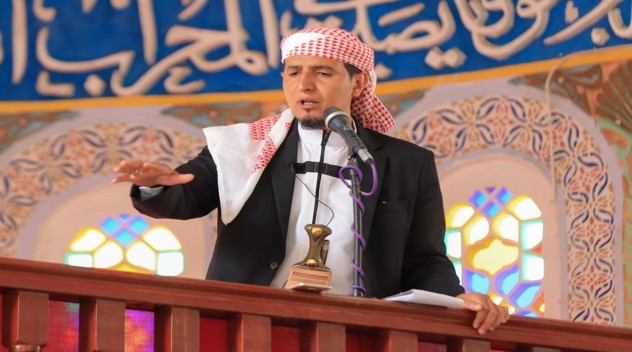
Following the training, the preachers came together to publish a joint statement and deliver 25 sermons. The joint statement outlined the role of scholars and preachers as societal leaders guiding communities towards reconciliation and restorative justice. Sermons reached 8,817 local listeners, including 8,026 men and 1,791 women.
💬 “I held very negative thoughts about transitional justice, seeing it as an external influence aimed at normalizing relations between conflict parties and imposing western rights. After listening to the khotba (sermon), my perception completely changed, and I now encourage this process.” – A community member engaged in a sermon presented by one of the preacher-trainees under the Peace Dialogue Restorative Justice Pilot.
In addition to sermons, two radio episodes were published via Watani FM to over 11 million potential listeners across 14 governorates. Episodes covered in-depth aspects of transitional justice, including the importance of promoting transitional justice rooted in religious values and cooperation between political parties and civil society in ensuring transitional justice successes.
The Marib Restorative Justice Pilot’s Cooperation with Influential Religious Figures
Recently, the Marib Restorative Justice Pilot launched their campaign to engage influential locals and religious preachers in educating and furthering local understanding of transitional justice principles. In April, SPARK partners launched a comprehensive training course in partnership with the Office of Endowments and Guidance in Marib Governorate. Training course content and structure mirrored the workshop held in Taiz under the Role of Religious Leaders Restorative Justice Pilot. Similarly, it lasted for a period of two days and took place in the hall of the Smart Training Center in Marib, Yemen.
The course covered several key topics, including the definition of transitional justice and its pillars, the relationship between transitional justice and religion under the values of justice and forgiveness, analysis of international transitional justice experiences in other countries, and exploration of the role of religious scholars and leaders in such experiences. It also included further in-depth topics discussing the connections between transitional justice and religion and exploring religious discourse on transitional justice.
Training course participants included 26 religious scholas and preachers, all proposed by the Office of Endowments for their diverse doctrines and areas. This included two women and 12 men. Over the two days, participants were engaged in seven sessions with intermittent breaks. Training methods featured PowerPoint presentations, lively group discussions, case study research and engagement, role playing and other activities aimed at fostering active engagement.
Notably, participants were given partial ownership of the course as well. They engaged in setting the rules of the training course, driving the course forward through robust dialogue, and a joint statement drafted by all participants. The course also provided a fruitful space for the exchange of preachers’ diverse ideas and experience. This also provides opportunities for joint reflection of preachers on ways to further religious discourse and ensure its relevance to societal issues, including IDP sheltering in public buildings.
4. Agreement and Impact
The training course was successful in deepening religious leaders’ understanding of transitional justice and its connection to religious values. It garnered significant media attention with coverage from over 15 news outlets. At the conclusion of the course, participants came together to develop a joint statement, demonstrating their commitment to integrating transitional justice into religious practices. The statement acknowledges the deep and dire impacts that the Yemeni conflict has had upon Yemeni civilians, including the displaced. Moreover, it affirms the religious figures’ commitment to upholding the values and principles of reconciliation, community cohesiveness, and restorative justice as they align with transitional justice.
Religious leaders further affirmed their role within community – to be a key pillar in supporting the path of transitional justice, promoting a culture of tolerance, and countering hate speech and division. It stated that these roles came within their religious and societal responsibility. They stood firm in their statement emphasizing that it is an expression of their practical commitment and genuine will to fulfill their roles within society.
It was published via SAM’s website in June. In line with the statement and with this commitment, religious preachers developed a collective framework integrating transitional justice into religious practices. Additionally, preachers committed to utilizing this framework to deliver approximately 20 sermons on reconciliation, coexistence, and other transitional justice principles. Through such sermons, preachers hope to reach thousands of local Yemenis and to increase their awareness, understanding, and appreciation for transitional justice.
💬 “Under this pilot, engagement of religious figures is crucial. These figures have direct lines to the diverse groups engaged within this initiative, including host communities, IDPs, and others. They will not only raise awareness of transitional justice – which is badly needed, as many of those engaged (especially IDPs) did not understand transitional justice and how it relates to their rights – but also their sermons will promote coexistence and societal harmony as the entire community recuperates and moves forward after IDPs are relocated.” – Lynn Arbid, Program Officer, DT Institute
5. Learning, Documentation, and Replication
The Peace Dialogue Restorative Justice Pilot
The success of the Marib Restorative Justice Pilot’s training course echoes those of previous SPARK initiatives. These include the Role of Religious Leaders Raising Awareness Initiative as well as the Peace Dialogue Restorative Justice Pilot. The Peace Dialogue Restorative Justice Pilot also engaged religious preachers in Taiz, following four dialogue sessions with female activists. Within these sessions, SPARK partners engaged 57 female activists, resulting in the production of a policy paper, which will be published online in June.
💬 “We want to open a window of hope, and a window to the coexistence in which we live as citizens and actors in this society… The safer the environment for women, the more cohesive and peace-building society will be.” – Facilitator of the religious leaders’ dialogue session held under the Peace Dialogue Restorative Justice Pilot.
The paper was used to guide religious preacher engagement in one dialogue session. The session was held for 19 preachers selected in partnership with the Endowments and Guidance Office in Taiz. The preachers came from three districts within Taiz. Within the session, preachers acknowledged the harm of digital incitement against female activists. The discussion emphasized that religious preaching and constructive criticism should be grounded in clear religious and legal principles. It also distinguished these from incitement, which goes beyond accepted religious and legal boundaries, undermines social cohesion, and may contribute to discouraging active women from participating in civic space.
💬 “Society needs all its energies; men and women together in reform, development and peacebuilding.” – Areligious preacher and participant in the dialogue session under the Peace Dialogue Restorative Justice Pilot.
The session concluded with joint development of an honor code aimed at enhancing understanding and cooperation between the various parties. The Honor Code consolidated the principles of mutual respect and the preservation of human dignity, emphasized the partnership between men and women in building society and the importance of engaging together in community dialogue and networking.
💬 “True religious discourse should be a speech of mercy and reform, not a speech of defamation or tearing apart of society.” – Anotherreligious preacher and participant in the dialogue session under the Peace Dialogue Restorative Justice Pilot.
The Sustained Impacts of the Initiatives
Each of the initiatives left sustained impacts upon participants and their communities. The Marib and Role of Religious Leaders Initiatives resulted in sustained communication platforms, including WhatsApp groups and regular coordination meetings with Endowment Offices. Moreover, participants agreed to continue engagement with one another. These platforms could evolve into early-warning and peace advocacy networks that support Yemen’s future transitional justice processes.
6. Scaling the Impact
SPARK’s restorative justice pilots and raising awareness initiatives provide a scalable model for integrating religious engagement into transitional justice programming across Yemen. Studies show that mosque sermons in conflict-affected areas include politicized or exclusionary messages, reinforcing community divisions. Radical narratives have been identified as one of the key obstacles to post-conflict reconciliation. By replicating this approach in other governorates, such as Ibb, Dhamar, and Hadramout, the project can help counter radical discourse, promote inclusive dialogue, and build trust between civil society and religious institutions.
“In Yemen, I see how religious leaders are among the most trusted and influential figures within communities. Their role extends far beyond places of worship,” explained DT Institute’s Senior Program Manager Feras Hamdouni, “They shape social attitudes, mediate disputes, and provide moral guidance during times of uncertainty.”
💬 “When religious leaders understand and support transitional justice, they help communities see that principles such as truth-telling, accountability, forgiveness, reconciliation, and restoring victims’ dignity are not foreign concepts, but values deeply rooted in religious teachings and Yemeni traditions. This creates a bridge between transitional justice frameworks and local realities, making peacebuilding efforts more legitimate, accessible, and sustainable.” – Feras Hamdouni, Senior Program Manager, DT Institute
In Hamouni’s experience religious leaders’ opinions hold weight in Yemen. Their support, or conversely their disapproval, of a community idea or process can have significant consequences. Moreover, experience from conflict-affected countries demonstrates that transitional justice processes are most effective when they are supported by trusted local actors.
💬 “In Syria, for example, religious leaders have played important roles in local reconciliation efforts, mediation between communities, advocating for the release of detainees, documenting violations, supporting victims’ families, and promoting messages that reject sectarian division. In areas where respected religious figures promoted dialogue and coexistence, communities were often more willing to engage in reconciliation initiatives and resist narratives that fueled further violence.” – Feras Hamdouni, Senior Program Manager, DT Institute
Conversely, when influential religious leaders oppose transitional justice or portray it as a foreign, political, or anti-religious agenda, the consequences can be significant. In conservative communities, such messaging can undermine public trust, discourage participation by victims and survivors, reinforce social polarization, and create resistance to accountability and reconciliation efforts. Negative religious discourse can also legitimize exclusion, deepen grievances, and perpetuate cycles of revenge rather than healing. This is particularly dangerous in post-conflict settings, where communities are searching for trusted guidance on how to move forward.
For this reason, investing in the awareness and capacity of religious leaders is not simply an outreach activity, it is a strategic peacebuilding intervention. By empowering religious leaders to become advocates for justice, tolerance, and coexistence, we create local champions who can help transform transitional justice from a technical concept into a community-owned process that contributes to lasting peace in Yemen.